summary of work done since Nov 2020 – 1876 Henry Erben Organ Waterbury CT
Celebrating the 101st Anniversary of its Relocation to St. Patrick Oratory Waterbury, Connecticut
& the 148th Anniversary of its Construction by Henry Erben
A PROGRESS REPORT and what’s still required
for our parish’s distinguished pipe organ
to be heard again–for the first time in decades!
summary of work done since Nov 2020
By Valley Organ Restoration Co. LLC
Christopher Schaefer, Principal & Project Manager. (with frequent assistance by David Hughes through 2023.) CT business Authoritative Legal Entity ID no. 2911668
towards the restoration of the 1876 Henry Erben organ at St. Patrick Parish & Oratory, Waterbury, Connecticut:
(The organ currently heard at Mass is an electronic substitute, not the huge pipe organ one can see in the back of the church. The pipe organ has not sounded for many years due to decades of neglect.)
Restoration Work Updated through September 20, 2024. Approximate value (i.e. what most organ companies would charge) for the work listed below: c. $250,000. Amount which Valley Organ Restoration Co has charged your parish, for both labor and materials: $0. Today a new organ of this size and specifications would cost over $1,000,000.
Replaced hazardous motor starter and shut-off switch in basement organ blower room with new Square D motor starter and safety shut-off switch for 1923 OrgoBlow blower’s 3-phase Westinghouse motor. (Motor was rebuilt in 1980s and is in excellent condition.)
old: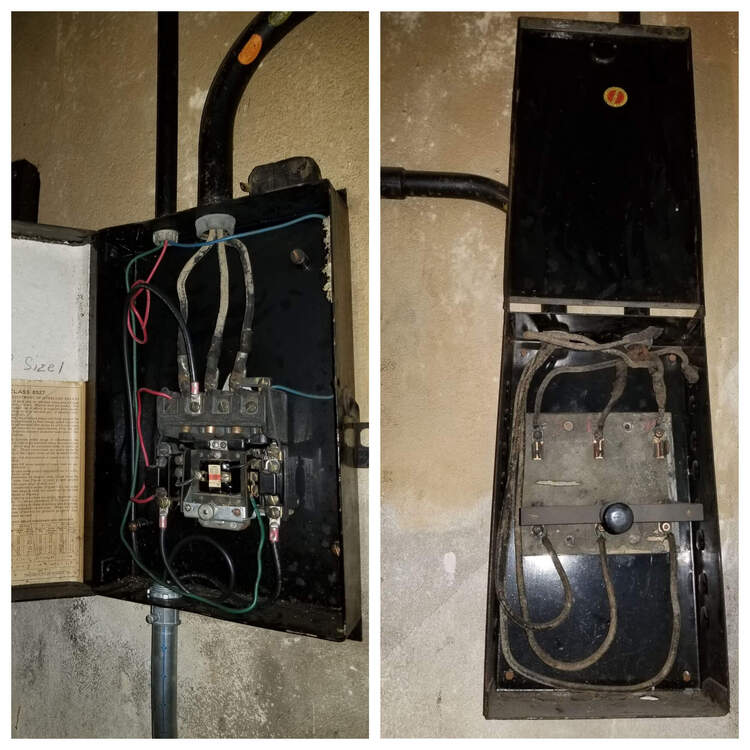
new: 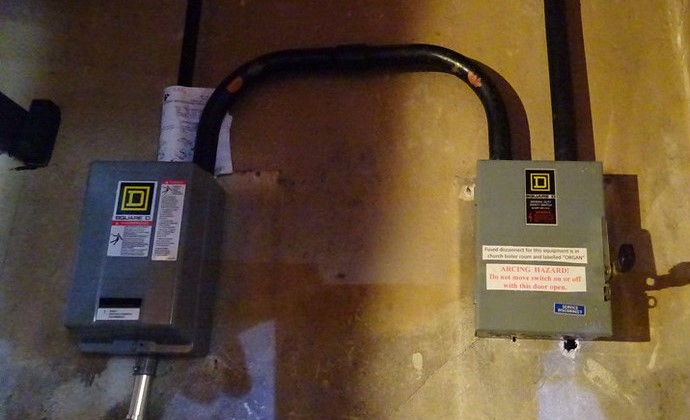
Added filter box to main wind trunk, which brings pressurized air from blower room up to the organ.
Covered deteriorating plaster wall behind entire organ with vinyl-coated hardboard paneling (aka high density fiberboard/HDF) screwed directly to wall studs; caulked all panel joints:
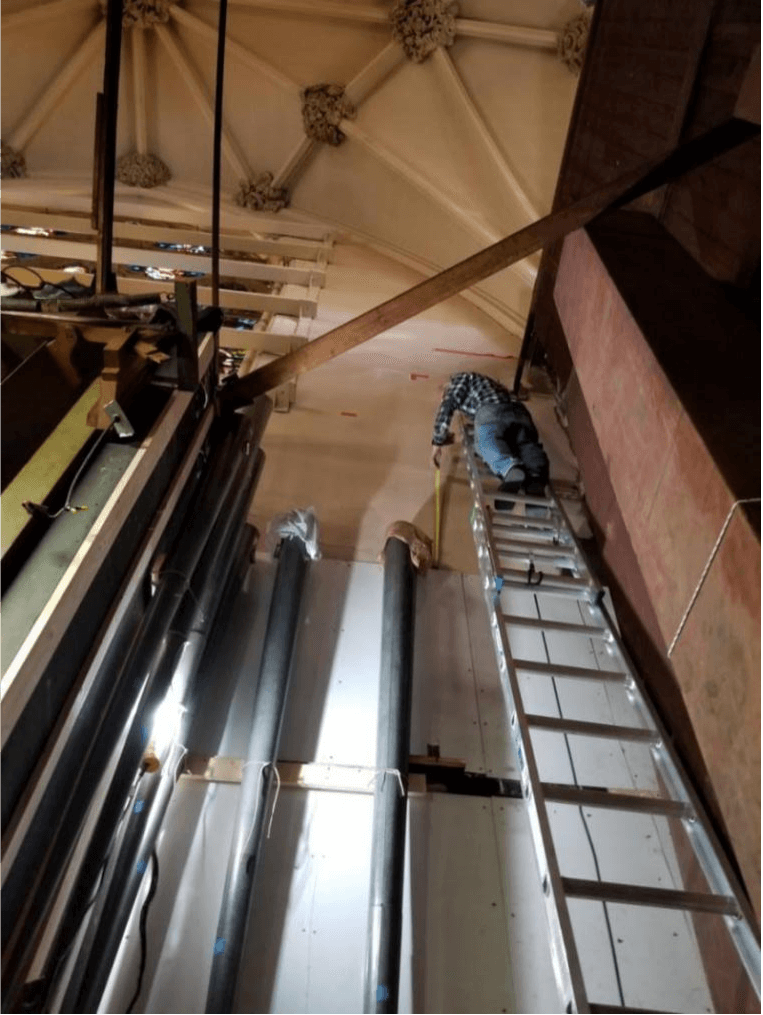
Chris atop 24-foot extension ladder, installing paneling behind organ, to cover deteriorated plaster. Virtually every surface of the organ was covered with bits of plaster and plaster dust.
Covered plaster between large window above organ and Swell & Choir chambers with waterproof cement board, with aluminum drip edge above and flashing below. Covered top of Swell and Choir chambers with tarps to prevent future water damage:
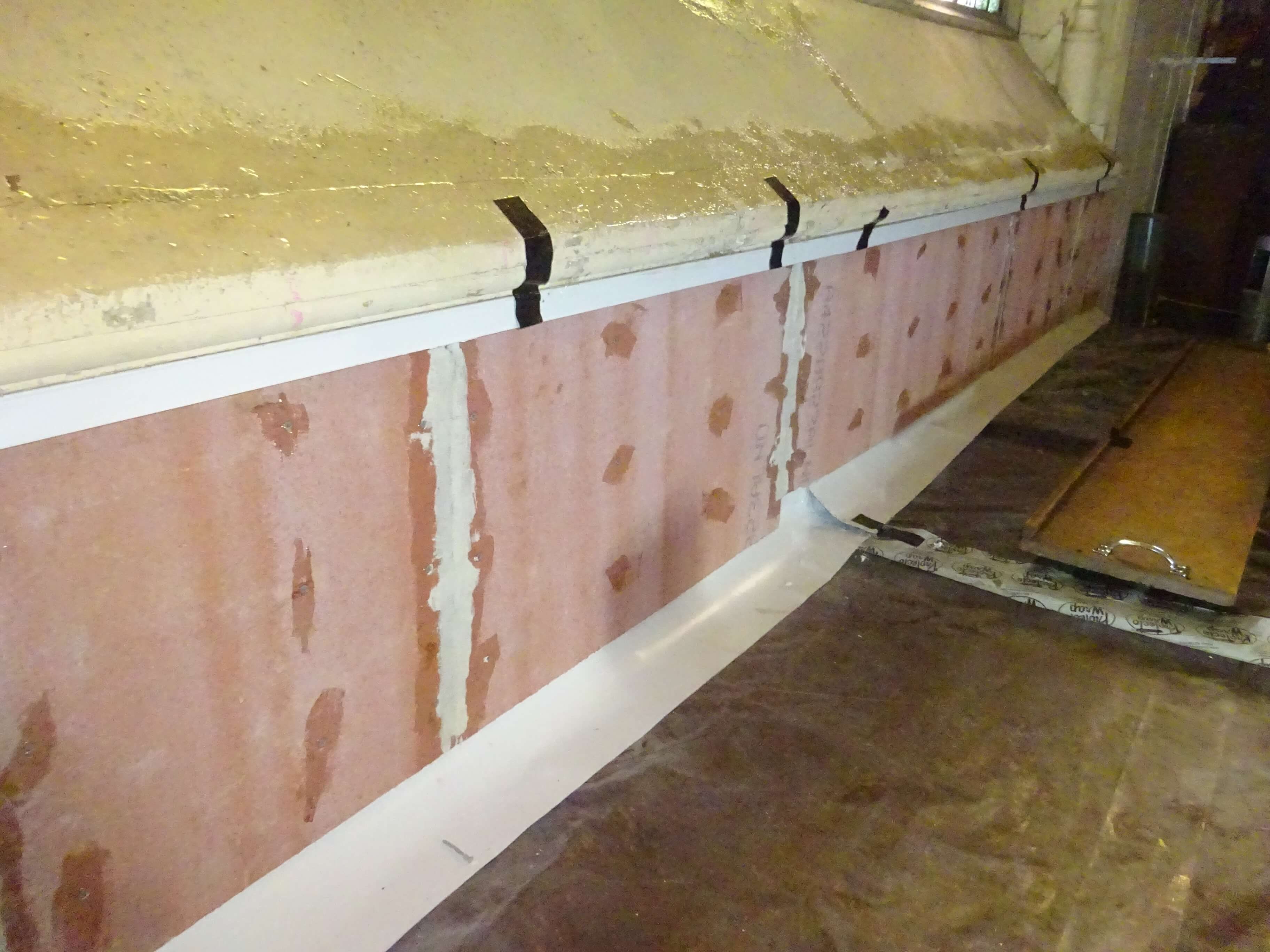
Added large steel corner braces to properly secure sides of organ case to studs in rear wall. Also placed large eye screws into studs across rear wall near top of organ, so next time the ceiling above organ needs repair or painting, protective tarps can be secured to these eye screws and pulled over entire organ.
Virtually every surface of the organ was covered with plaster dust, necessitating extensive cleaning: Removed and vacuumed all pipework (except ten largest 16’ Open Wood pipes of Pedal division, although these temporarily were rearranged on wind chest to access their toe board and slider; also did not remove gilt façade pipes). Also cleaned blower room in basement.
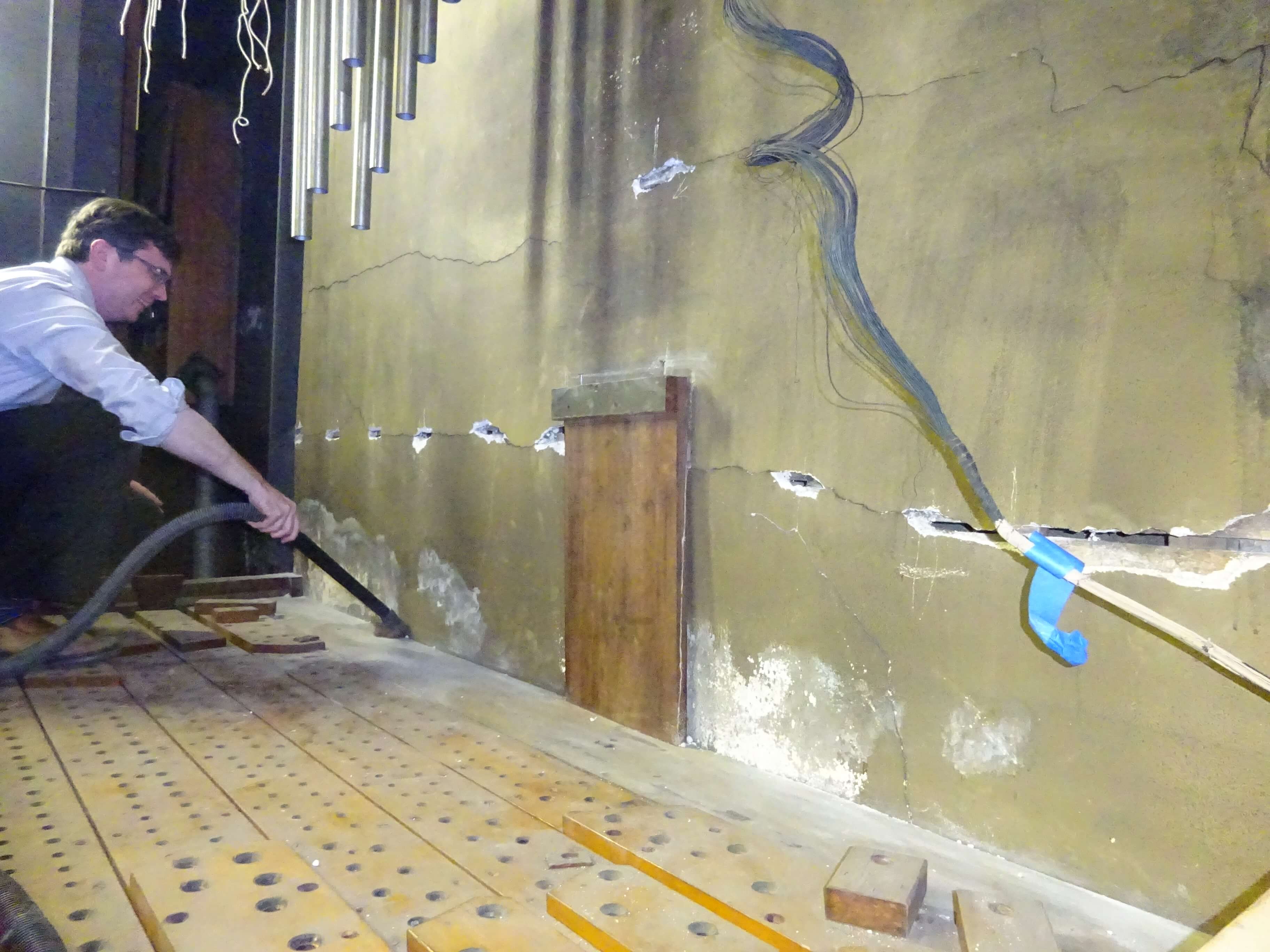
former parish organist David Hughes (who often had assisted Chris with the organ restoration through 2023) vacuuming top of Choir division wind chest, before the installation of HDF panels over plaster wall
.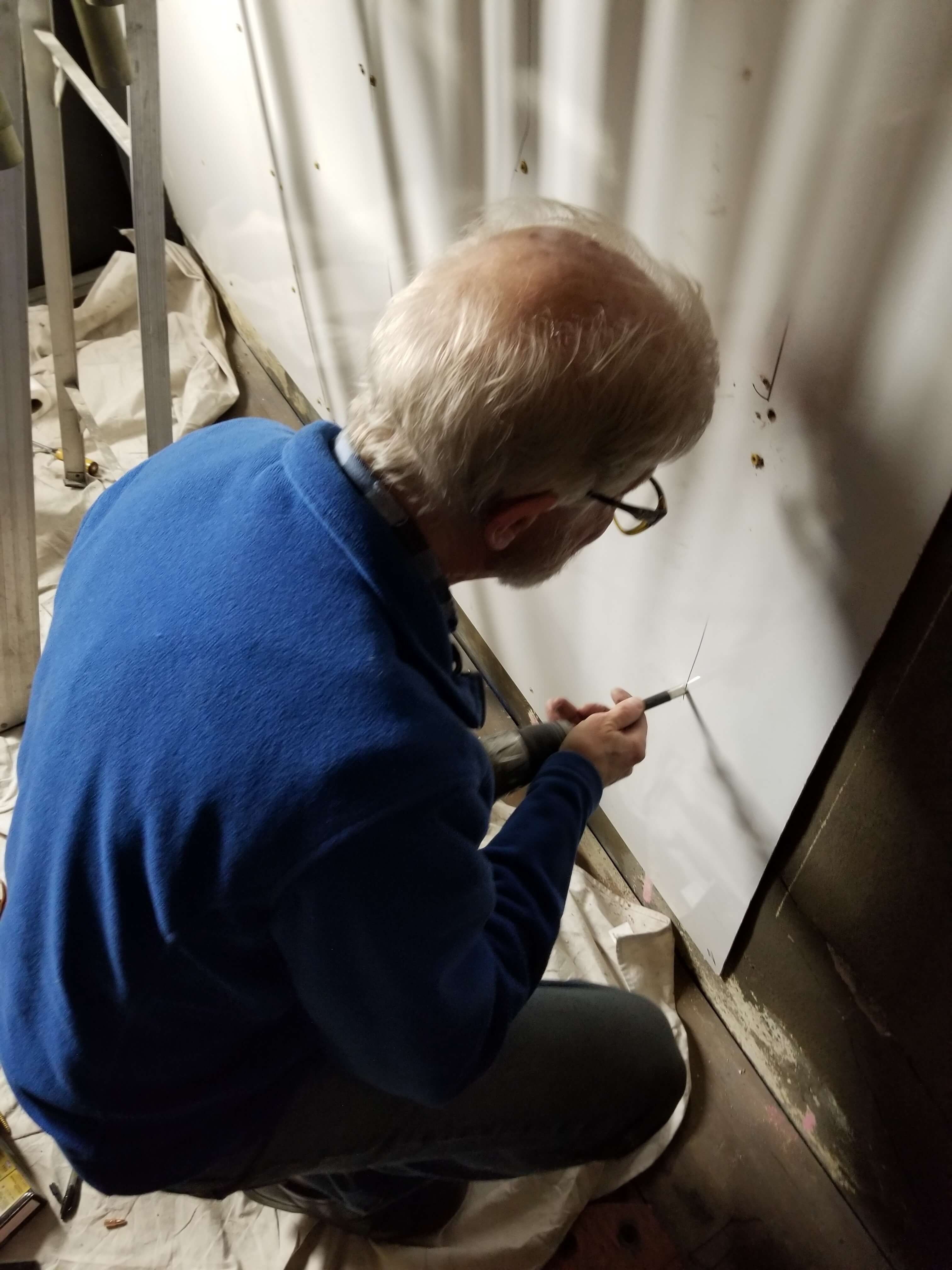
Chris installing more HDF panels over plaster wall
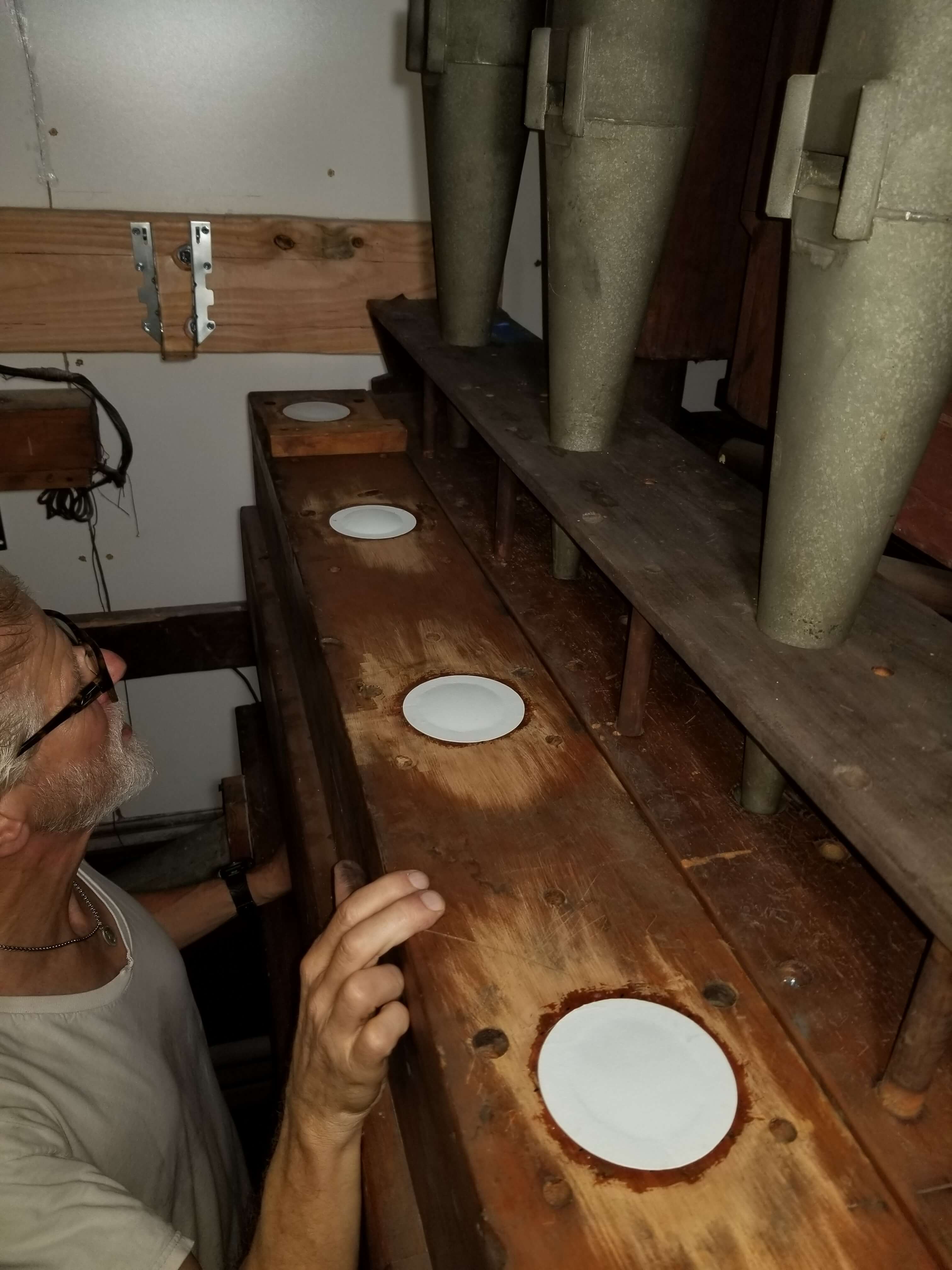
Removed, vacuumed, lubricated toe-boards, sliders, bearer-boards of all slider wind chests. Used traditional graphite for Great, Pedal and Choir divisions; used Protek CLP polymer (similar to Teflon) for Swell division. So this is an on-site test to compare the two products’ durability, etc.
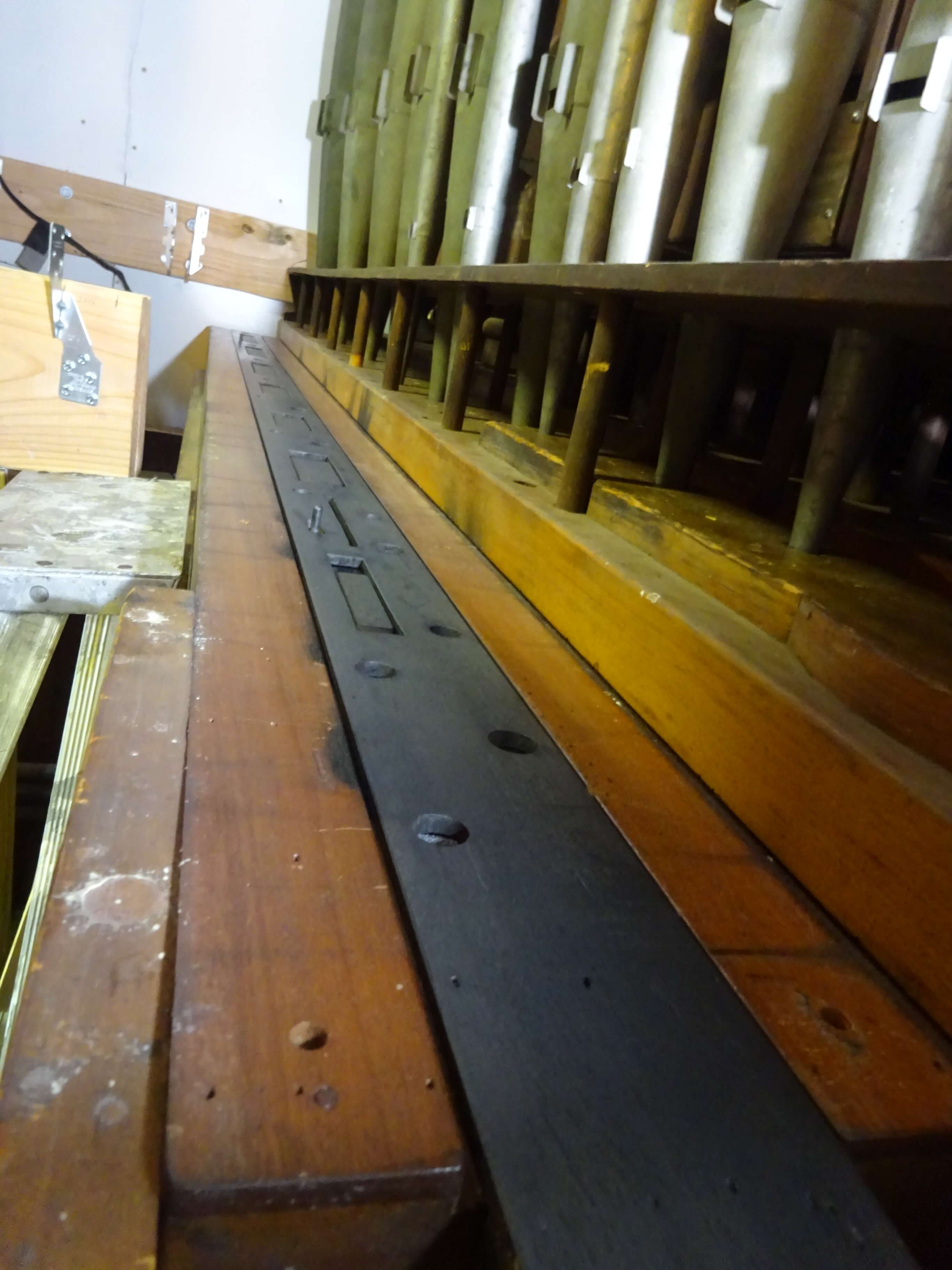
Pictured above: one of 38 Sliders, cleaned and reinstalled with a new coat of black graphite lubricant. The slider has holes which correspond to matching holes in the toe board, which fits over the slider. The pipes and supporting pipe rack then sit on the toe board (as can be seen immediately to the right of the exposed slider). When that particular set (rank) of pipes is turned off, the slider’s closed position blocks the holes in the toe board. When the organist wants to use that particular rank, he pulls the stop knob at the console, which causes the slider’s holes to align with the holes in the toe board. So when the organist plays a note, air now can pass from the wind chest’s note channel and into the toe hole of the pipe to sound that note.
Modified side of Choir chamber so it can be opened for easier access:
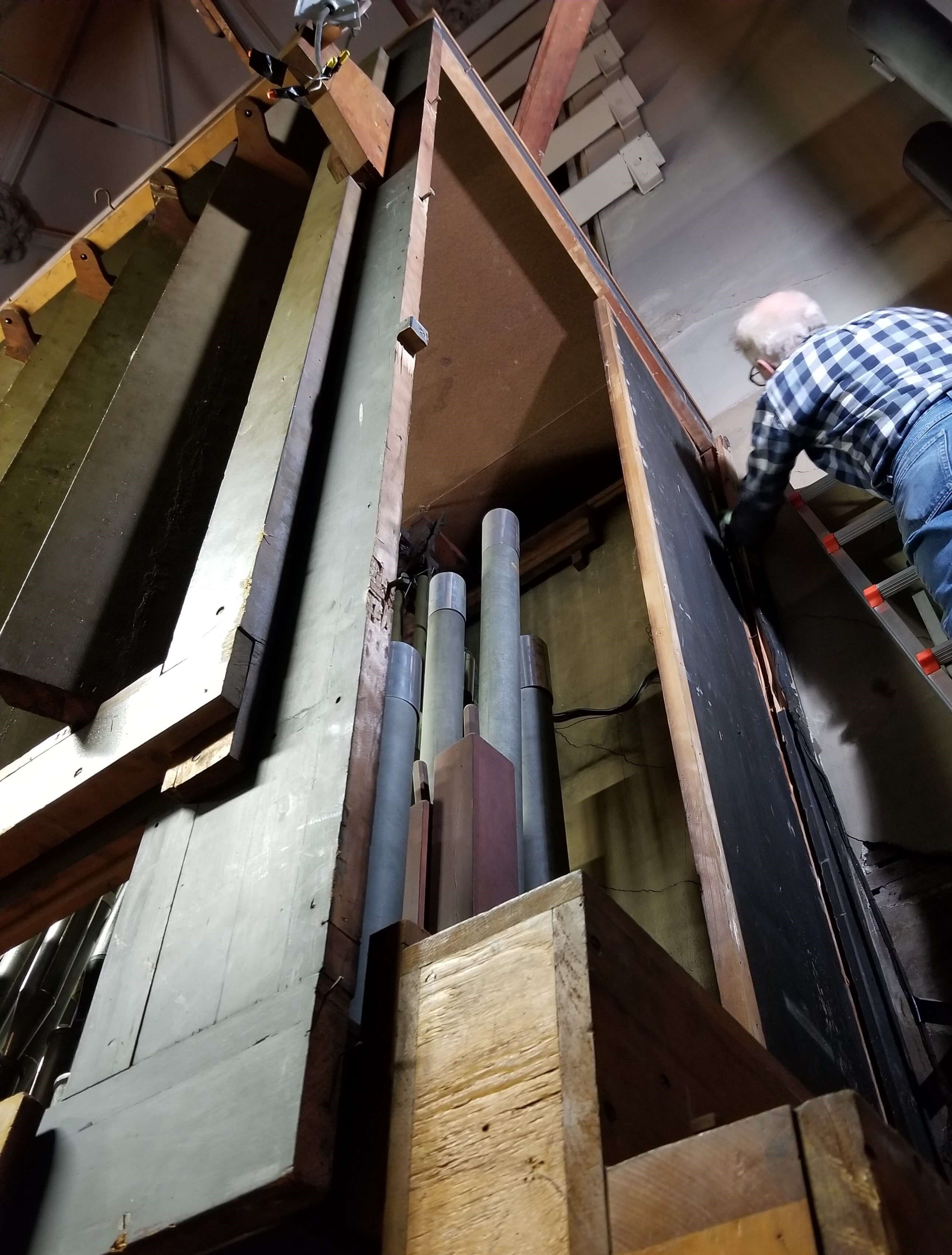
Added safety grips near top of access ladders. Reinforced hazardous walk-boards with joists:
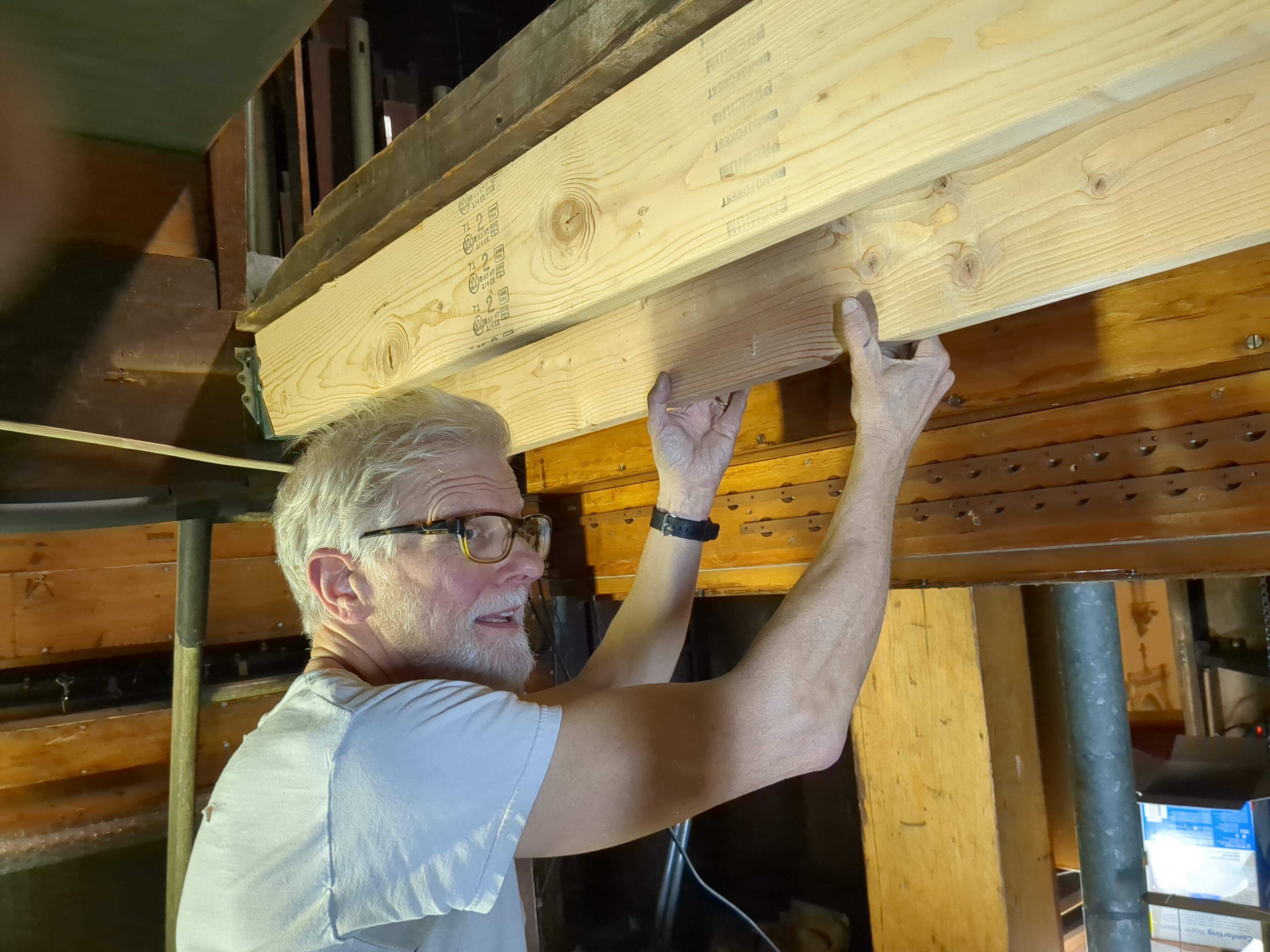
Chris reinforcing an 1876 walk-board with new floor joists
Provided new access ladders: 24’ extension, 8’ straight; also a dedicated Shop Vac.
Constructed a small staircase over main wind-trunk to facilitate entering Swell division chamber for tuning and maintenance:

Constructed temporary platform to facilitate work on large pipes and wind chests of Pedal division:
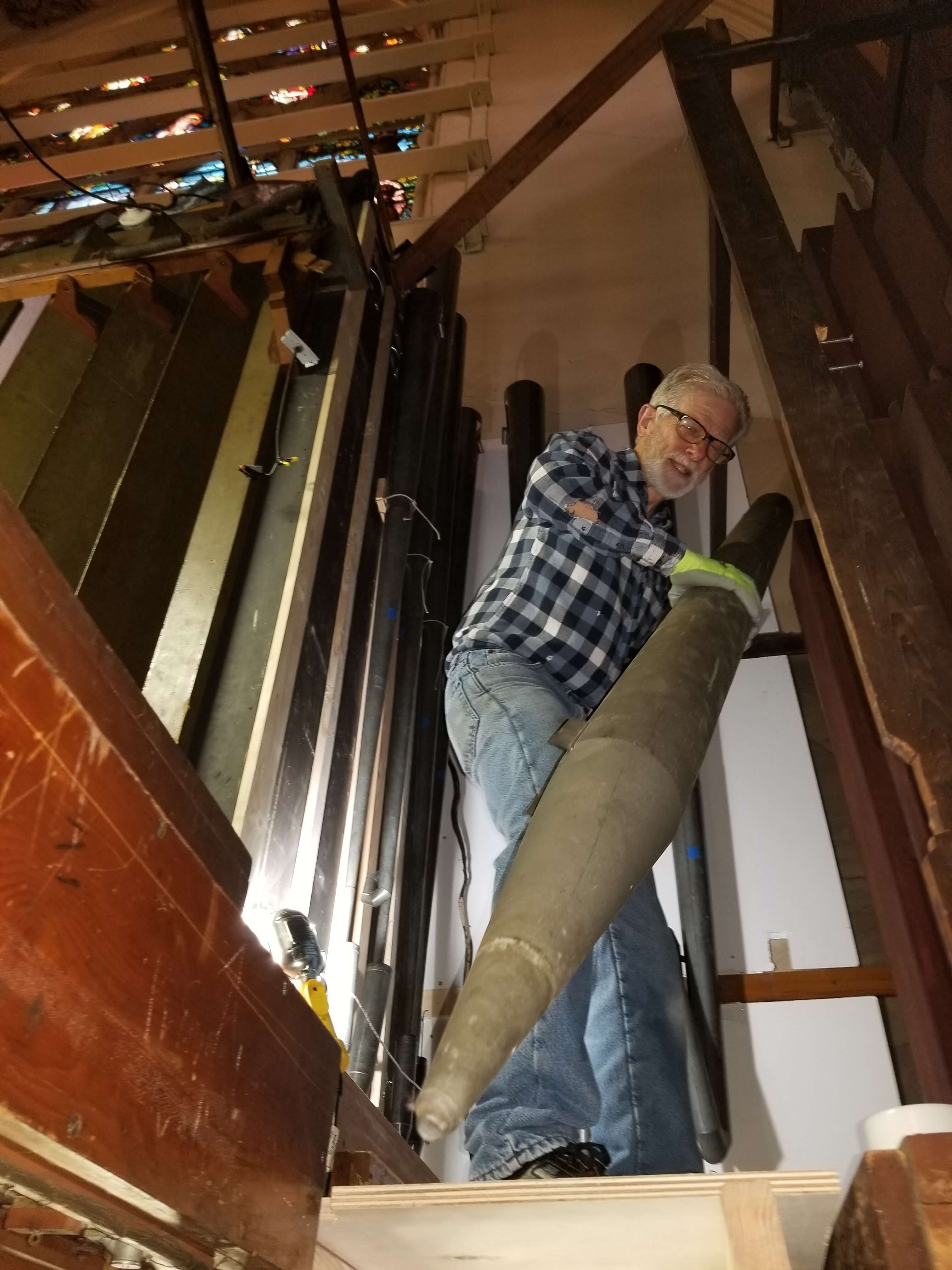
Chris standing on temporary platform while removing a large Pedal pipe
Upgraded/added electrical outlets inside organ and in loft.
Replaced all florescent lighting inside organ with energy-efficient LEDs and rewired circuitry so that all work lights now are controlled by a single illuminated light switch.
Posted circuitry map inside organ, identifying which circuit breaker controls which lights and outlets.
Modified one case front panel with handles and magnetic catches, and enlarged and increased existing floor openings between console and front of organ case, to facilitate running cables from inside organ to console.
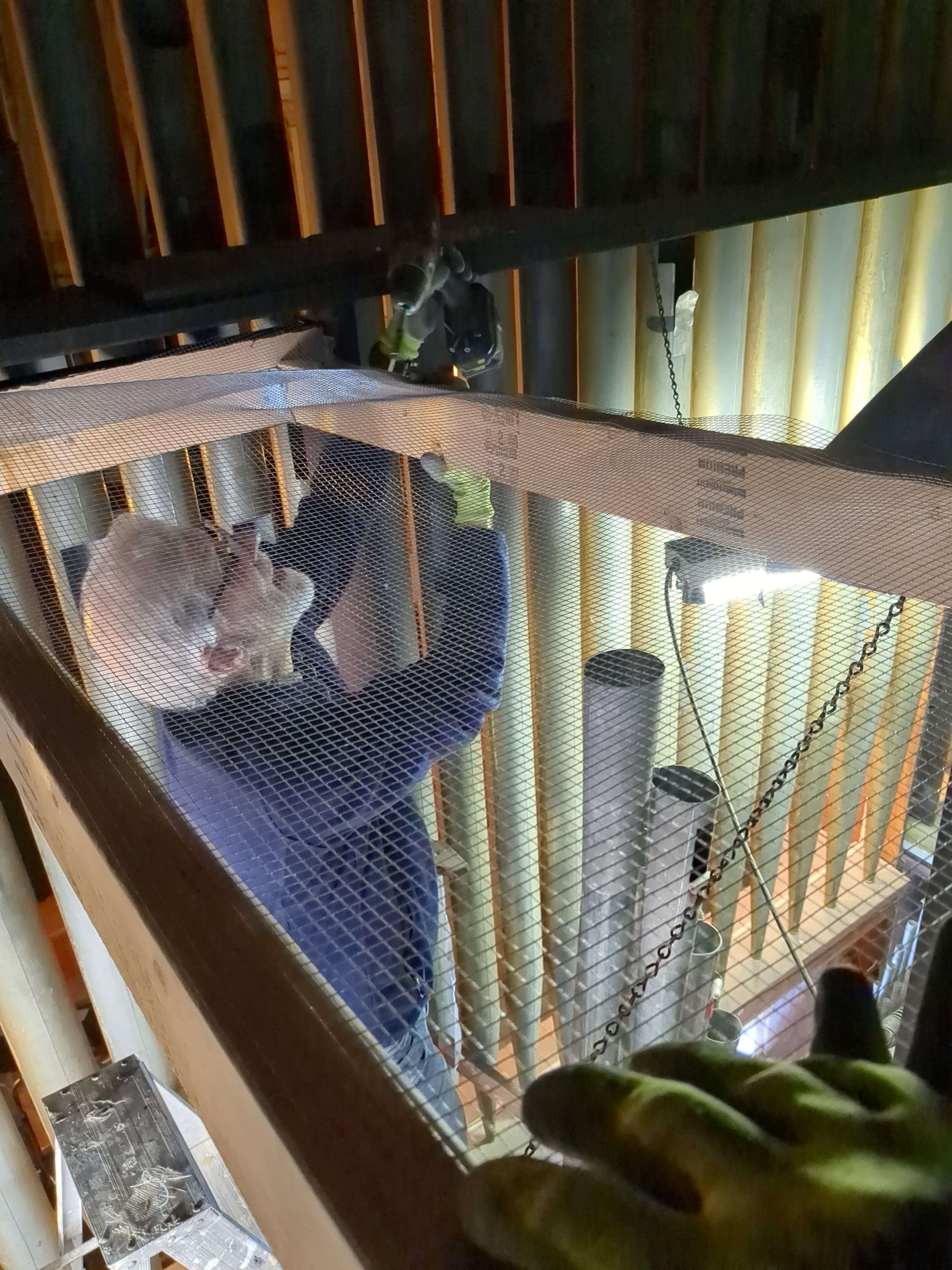
Covered Great division and Tuba with hardware cloth “roofs” to protect from future possibility of falling ceiling plaster:
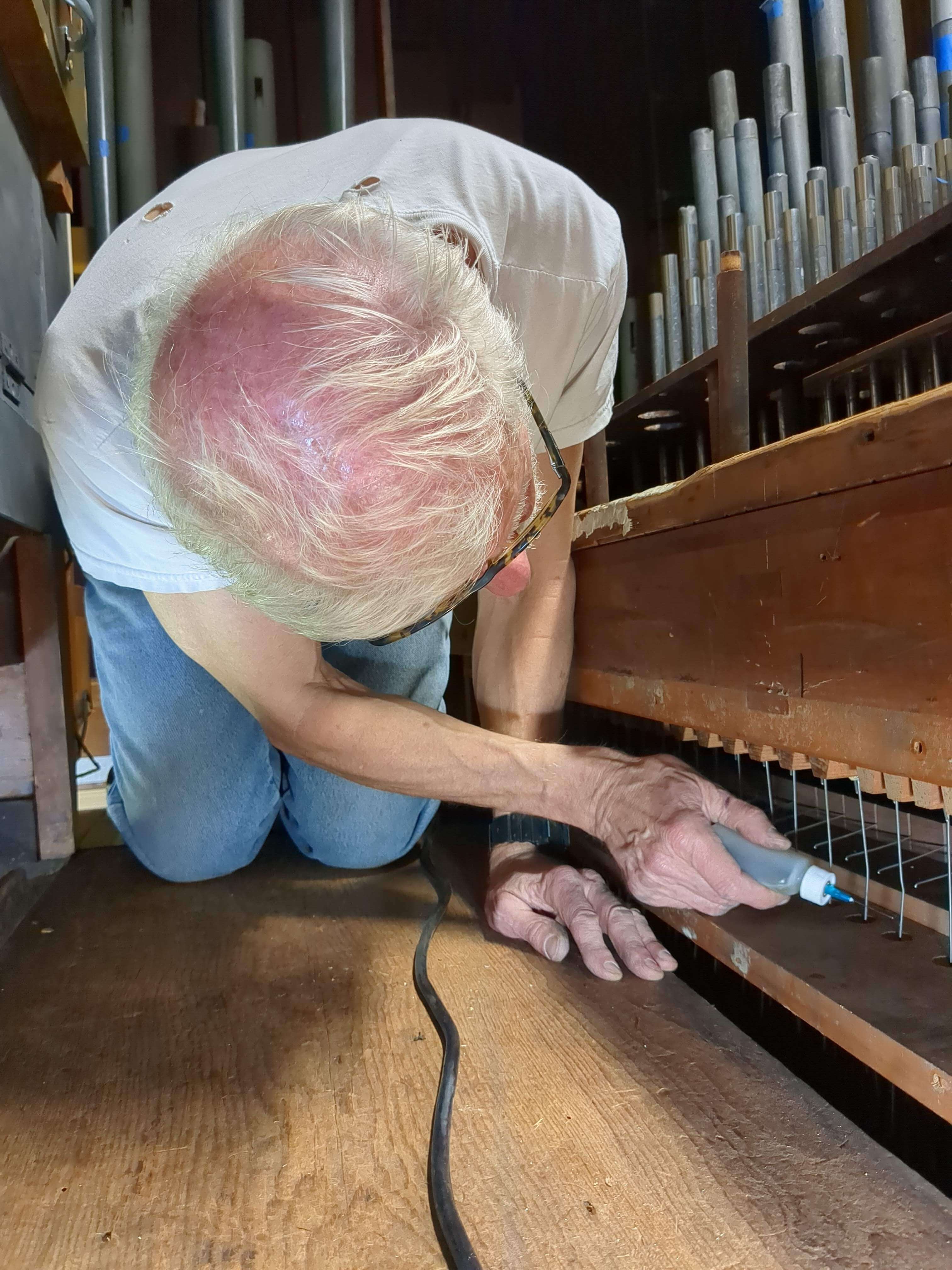
Lubricated all pallet (note valve) pull-down wires with Protek CLP polymer (similar to Teflon):
Replaced 3-inch diameter wind conductor to Tuba and Great Double Open Diapason with 4-inch diameter wind conductor (for wind which originates from separate vertical reservoir serving these 2 ranks only).
Replaced non-functional, Jerry-rigged electro-pneumatic valve system of 14 Double Open Diapason “tower” pipes of façade with 14 Peterson electromagnetic Super Valves (which ultimately will be doubled to provide adequate air to these huge pipes):
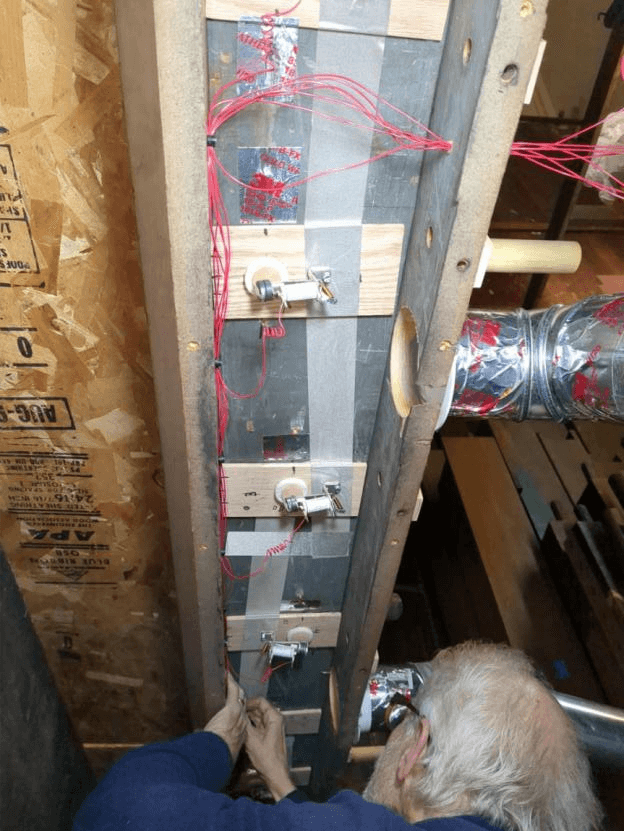
Replaced one 6-note 1923 electro-pneumatic façade windchest with rebuilt, re-positioned electromagnetic (“direct electric”) windchest and relocated part of façade structural support, to free up front most bearer of Great windchest (which was the original location of Great 16’ Double Open Diapason wind conveyances, replaced with façade’s 5 electropneumatic windchests in 1923).
Replaced 12 leather pneumatic pouches of pedal 16-foot Tuba (extension of Great 8’ Tuba: a 1923 addition which replaced original 16′ Trombone):
Chris testing new leather pouches for leaks
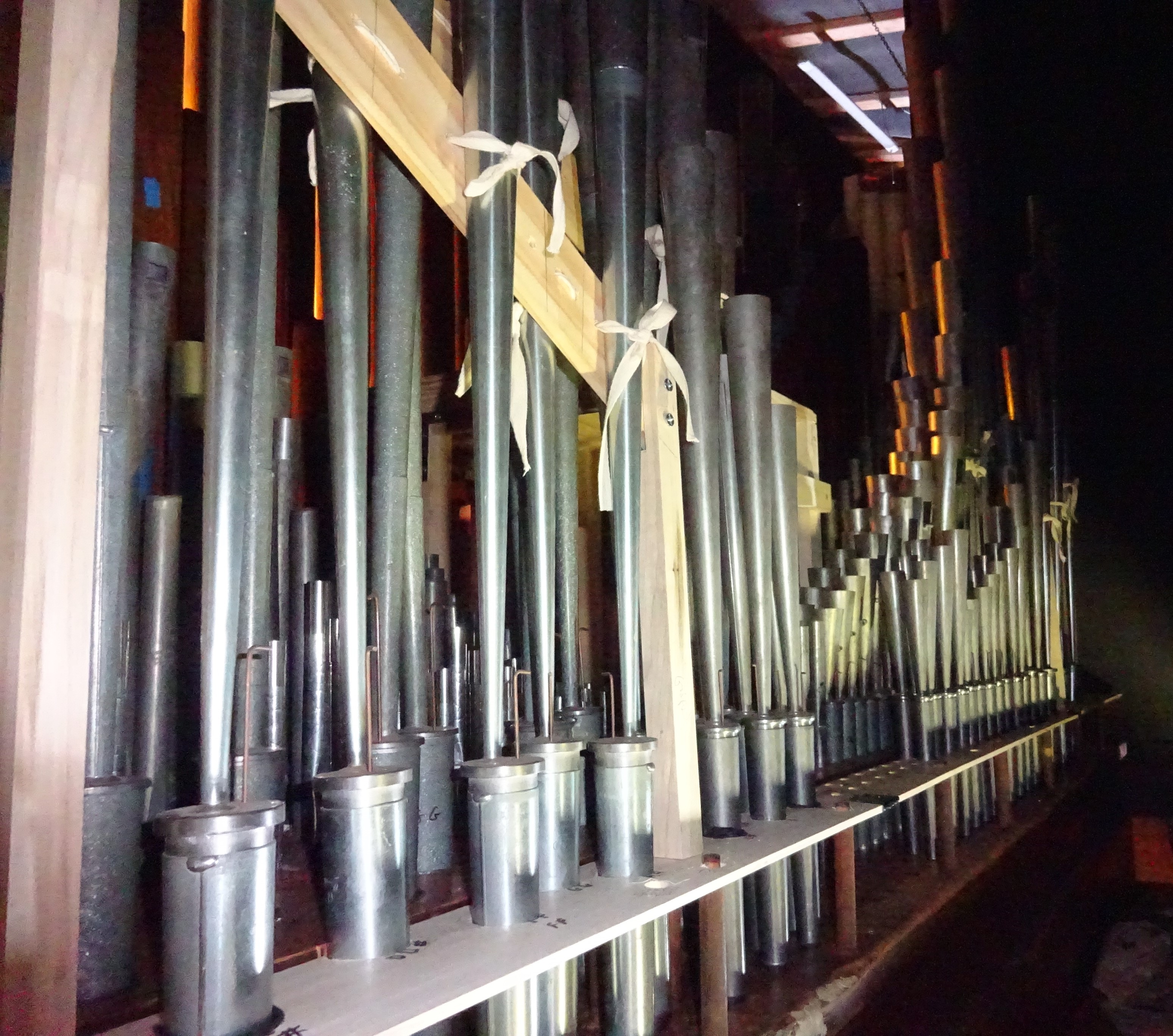
Replaced 4 missing stops in Great:
Mixture III, Sesquialtera III, 8’ Trumpet, 4’ Clarion with salvaged pipework: Sesquialtera from 1870s, others from 20th c. (Approx. 50 small flue pipes, between c4 and a4, still need to be replaced in these 4 stops.)
Replaced 2 missing stops in Swell:
Cornet III, 8’ Cornopean with salvaged pipework: Cornet from 1870s-1880s, Cornopean from early 20th c.
So, a total of nearly 700 missing pipes were replaced: twelve, 58-note sets (“ranks”) of pipes, comprising over 1/3rd of the organ! If new, these would cost approximately $200,000! What Valley Organ Restoration Co LLC charged your parish: $0
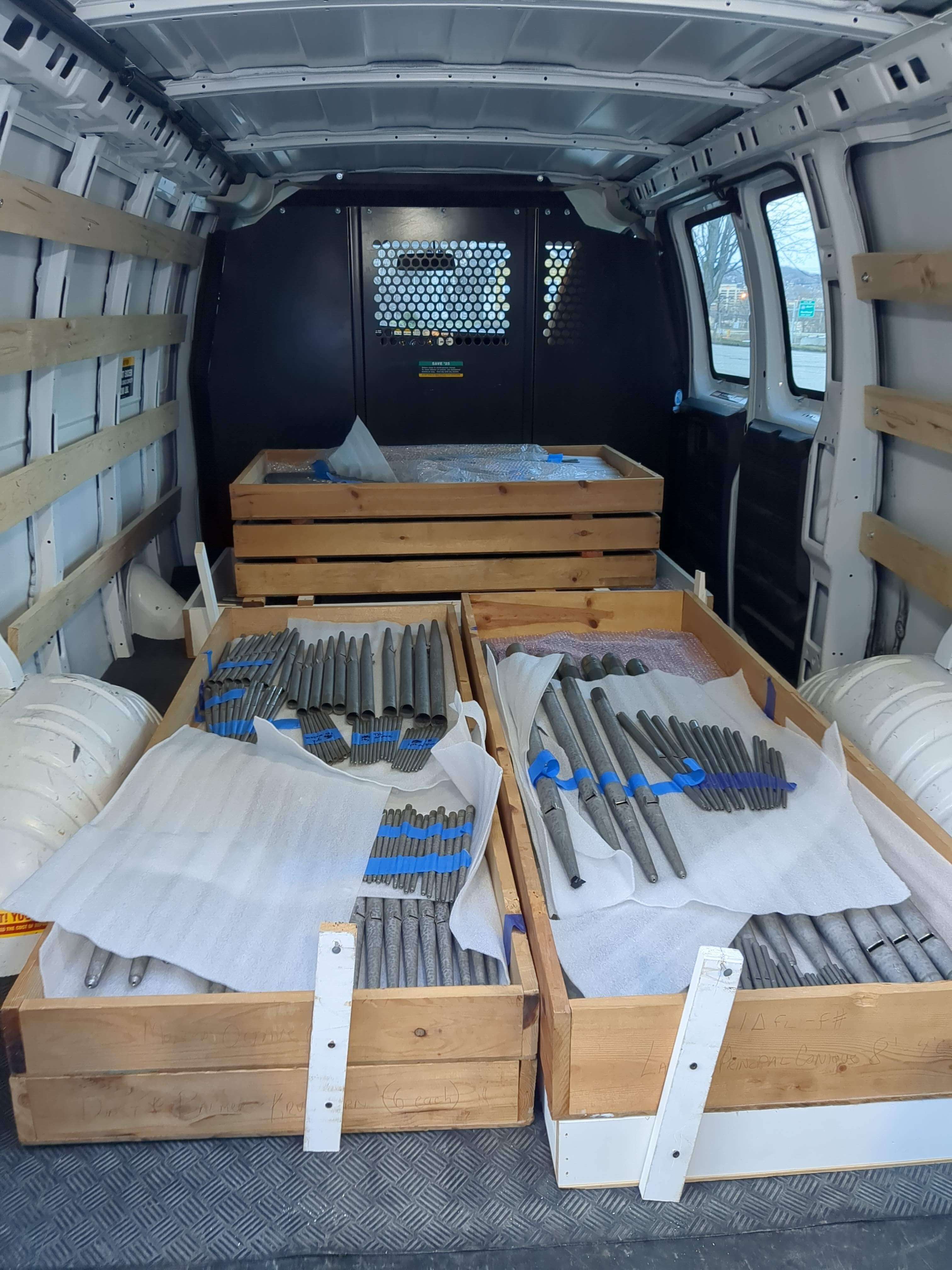
one of 3 van loads of salvaged organ pipes, saved from various dismantled/destroyed organs, and obtained by Valley Organ Restoration Co from organ companies in New York, Maryland and Pennsylvania:
The salvaged 4′ Clarion; its new supporting pipe rack was constructed by Valley Organ Restoration Co:
Procured 1927 E.M. Skinner, 3-manual & pedal, pipe organ console from that company’s dismantled Op. 665. This console was gutted & refitted c. 2007 with new draw knobs & keyboard electrical contacts. Console currently is used to control recorded (“sampled”) imitation pipe organ sounds, played through speakers. However, the keyboards’ and draw knobs’ modular electrical connectors easily can be attached to a new solid state Pipe Organ control system:
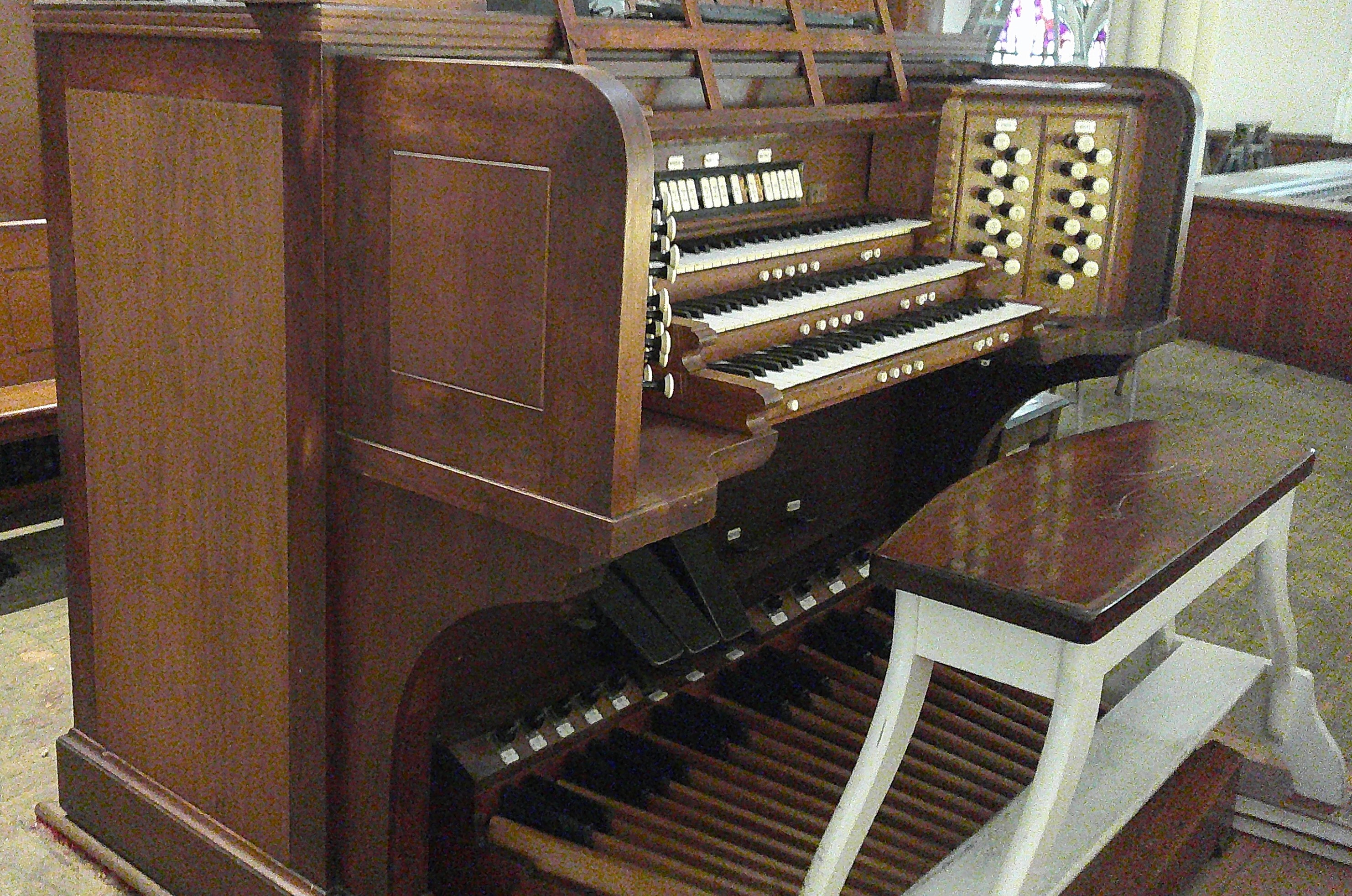
This refurbished console ultimately will be connected to your parish pipe organ.
Replaced unsightly surface-mount cable raceways for track lights mounted on front of organ case with new concealed armored cables.
Modified shade dogs of Swell and Choir divisions, replacing screws or removable pivot pins with fixed steel dowel pins, and relocated Choir shade dogs several feet lower. With these modifications the trace rod now can merely be lifted off, making it easier to remove shades in front of Swell and Choir chambers when doing maintenance or repairs inside the chambers:
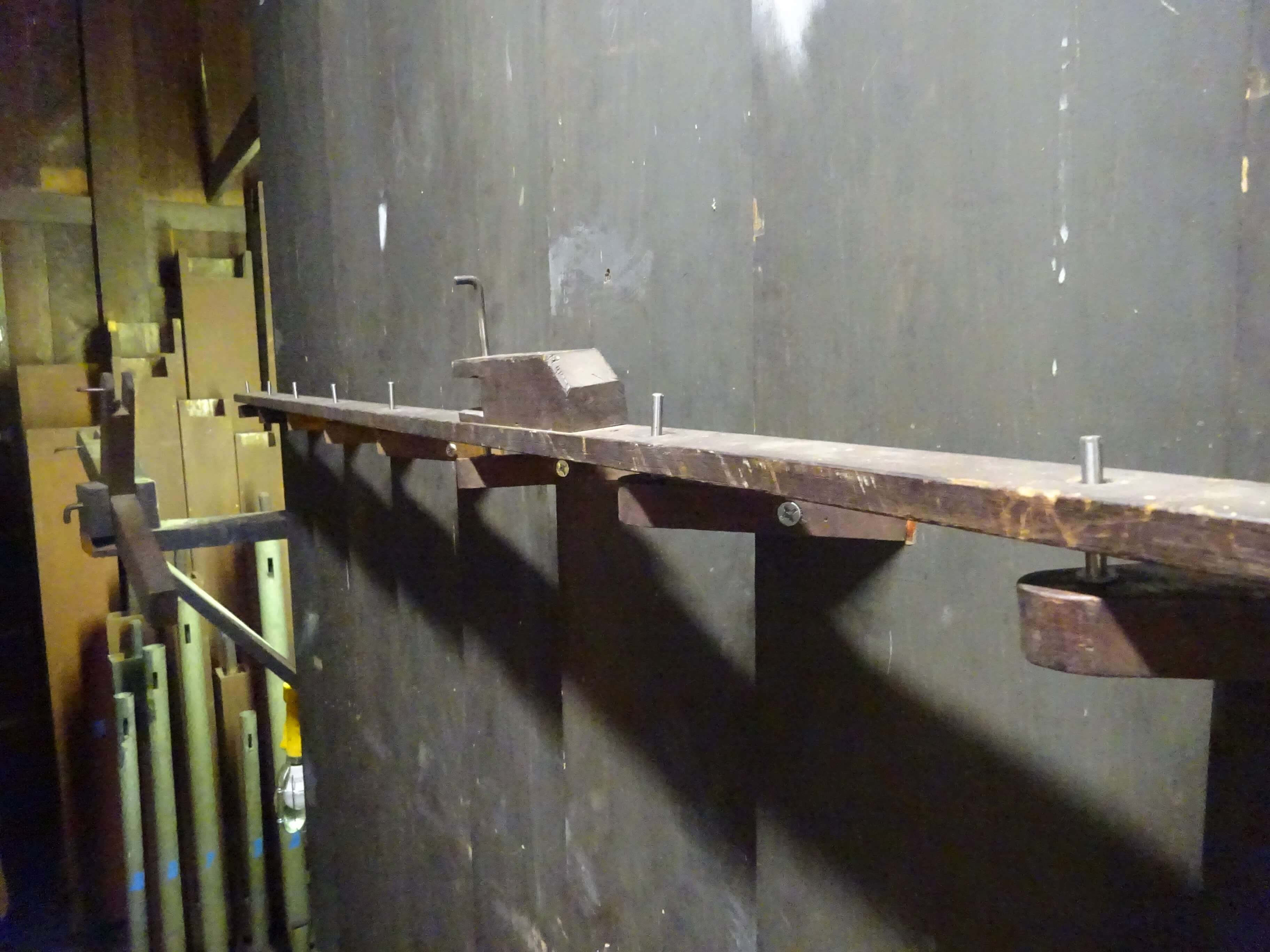
Horizontal trace rod is fitted over steel dowel pins of shade dogs, so all 11 shades open or close simultaneously. The trace rod then was connected to a new shade motor, to be controlled by a foot pedal at the console.
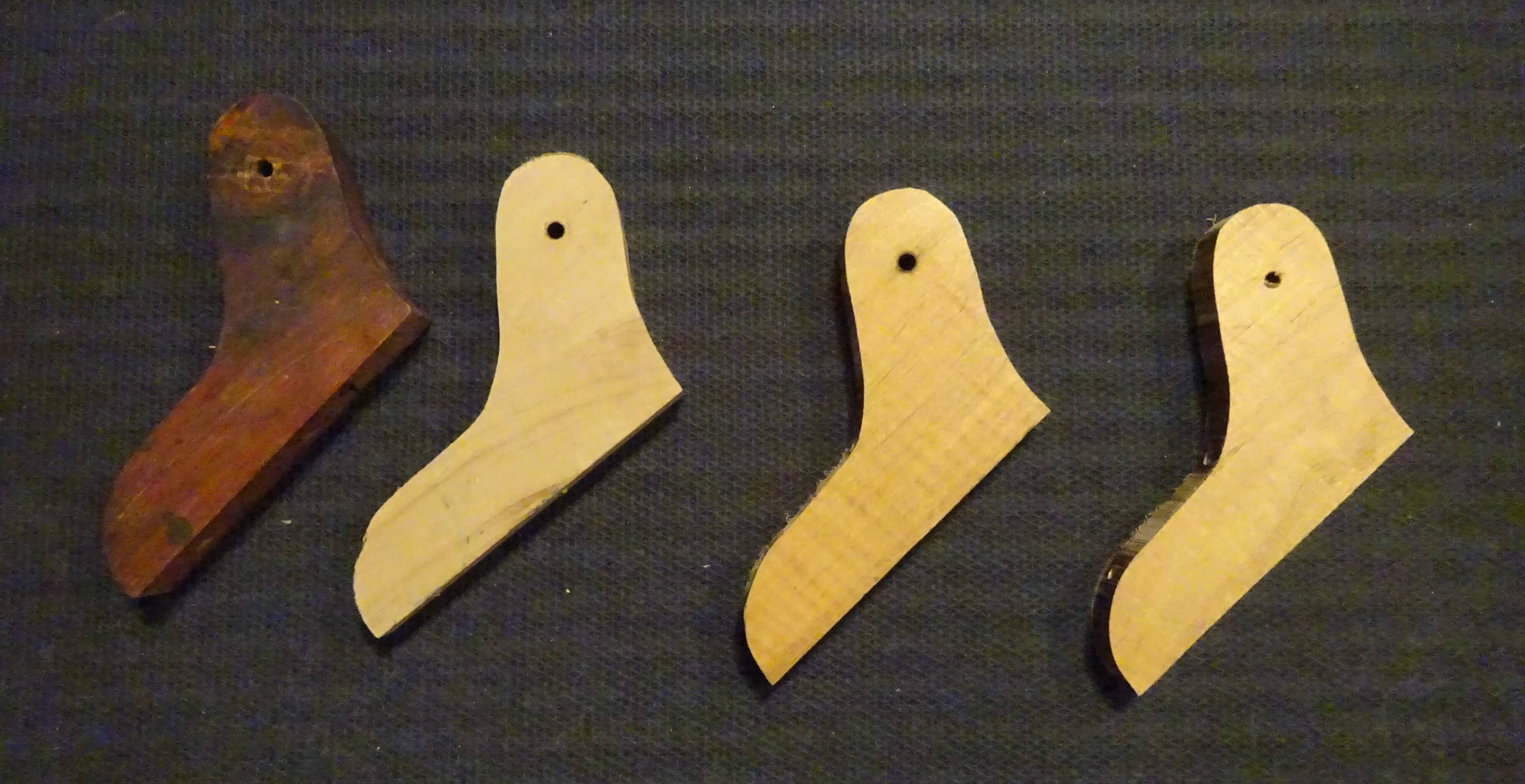
Replaced several broken shade dogs of Swell and Choir with custom reproductions made by Abbé Kevin Kerscher, ICKSP. Leftmost in photo below is original, the others are Abbé Kevin’s reproductions:
Replaced steel washers of bottom pivot pins of Swell and Choir shades with Teflon (PTFE) washers, so shades move much more smoothly. Also modified top of Swell division shades to make them easier to reinstall:
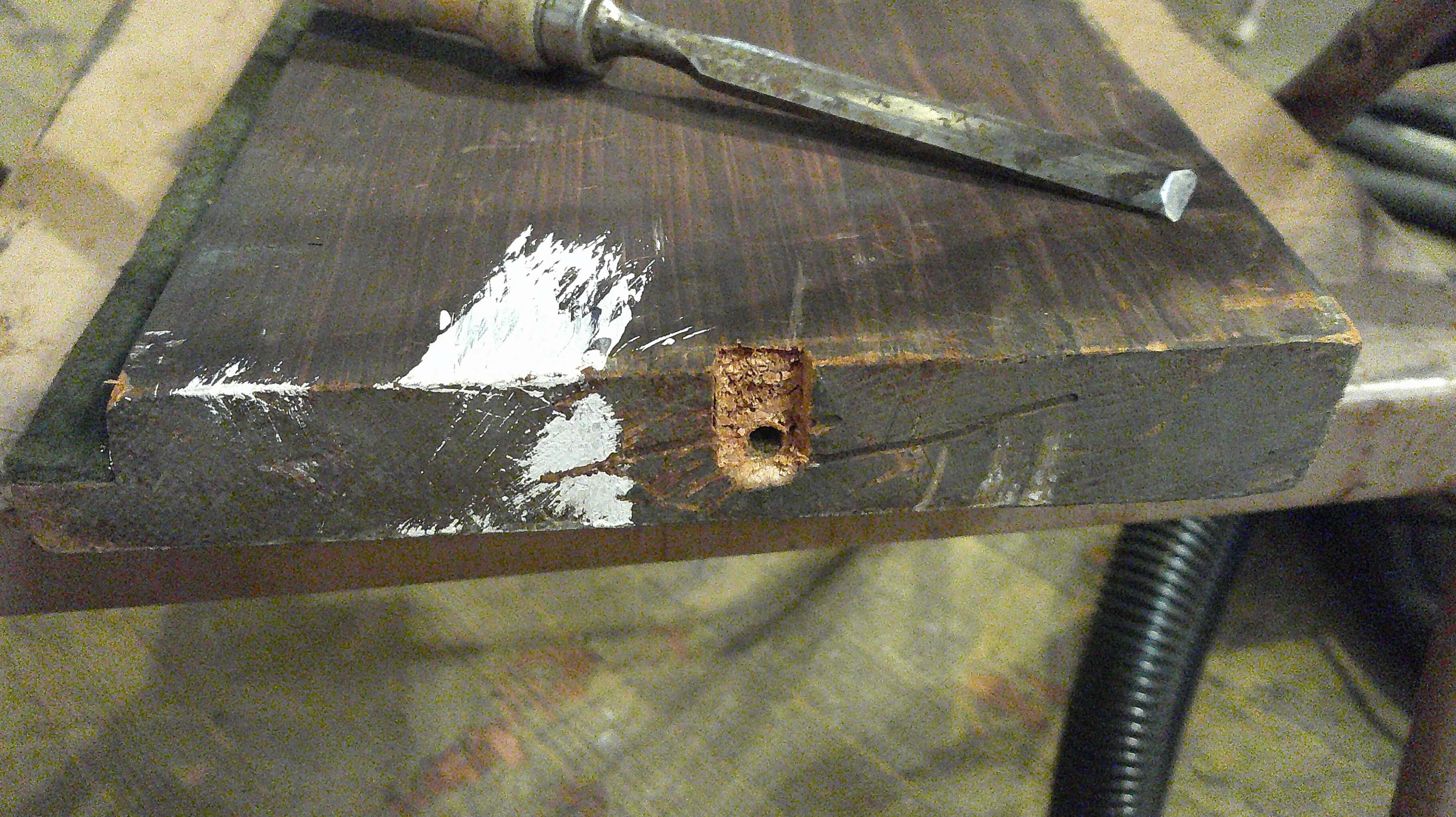
Channel chiselled into top of Swell shades by Valley Organ Restoration Co. makes it easier to slide top pivot pin into place when reinstalling shade.
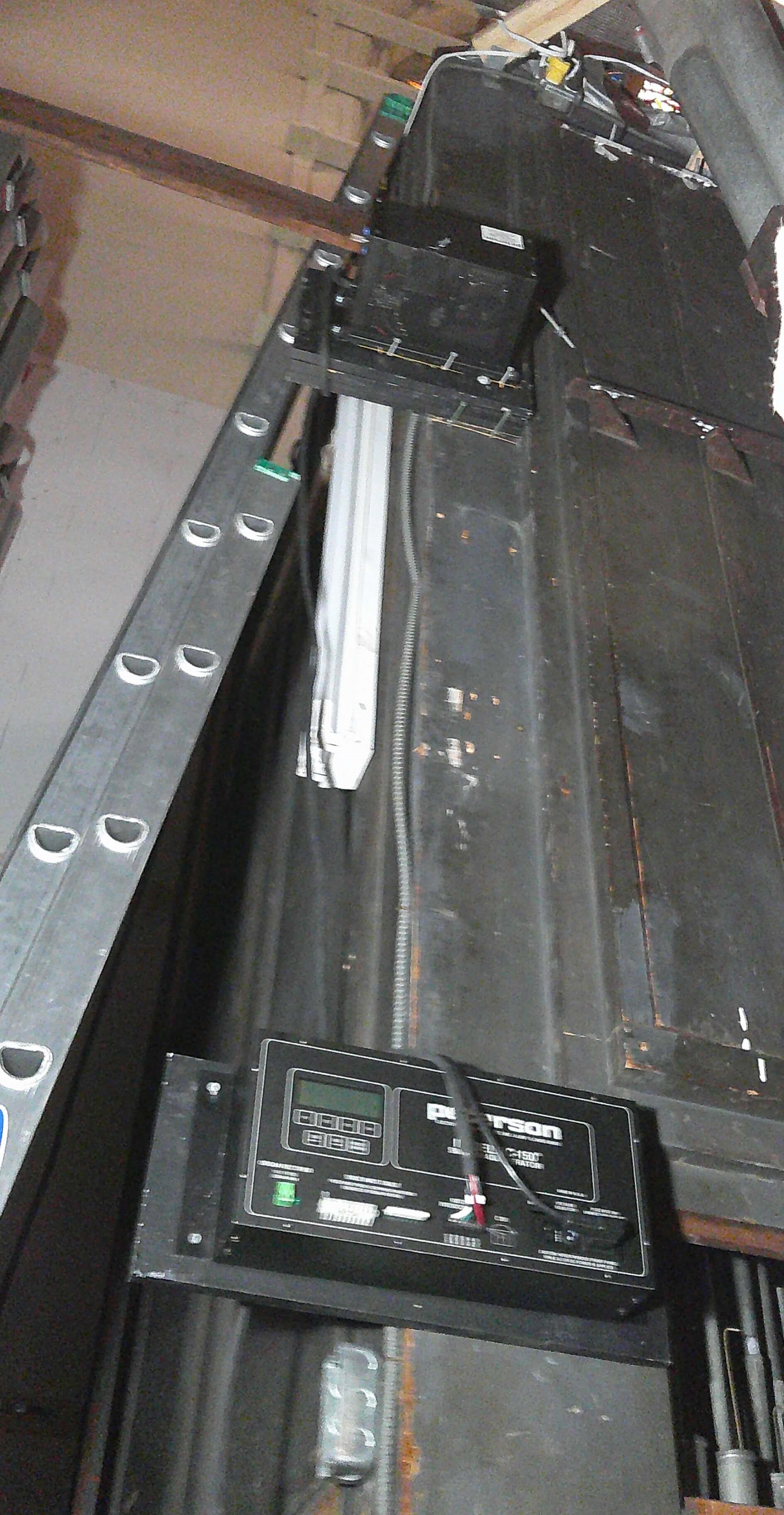
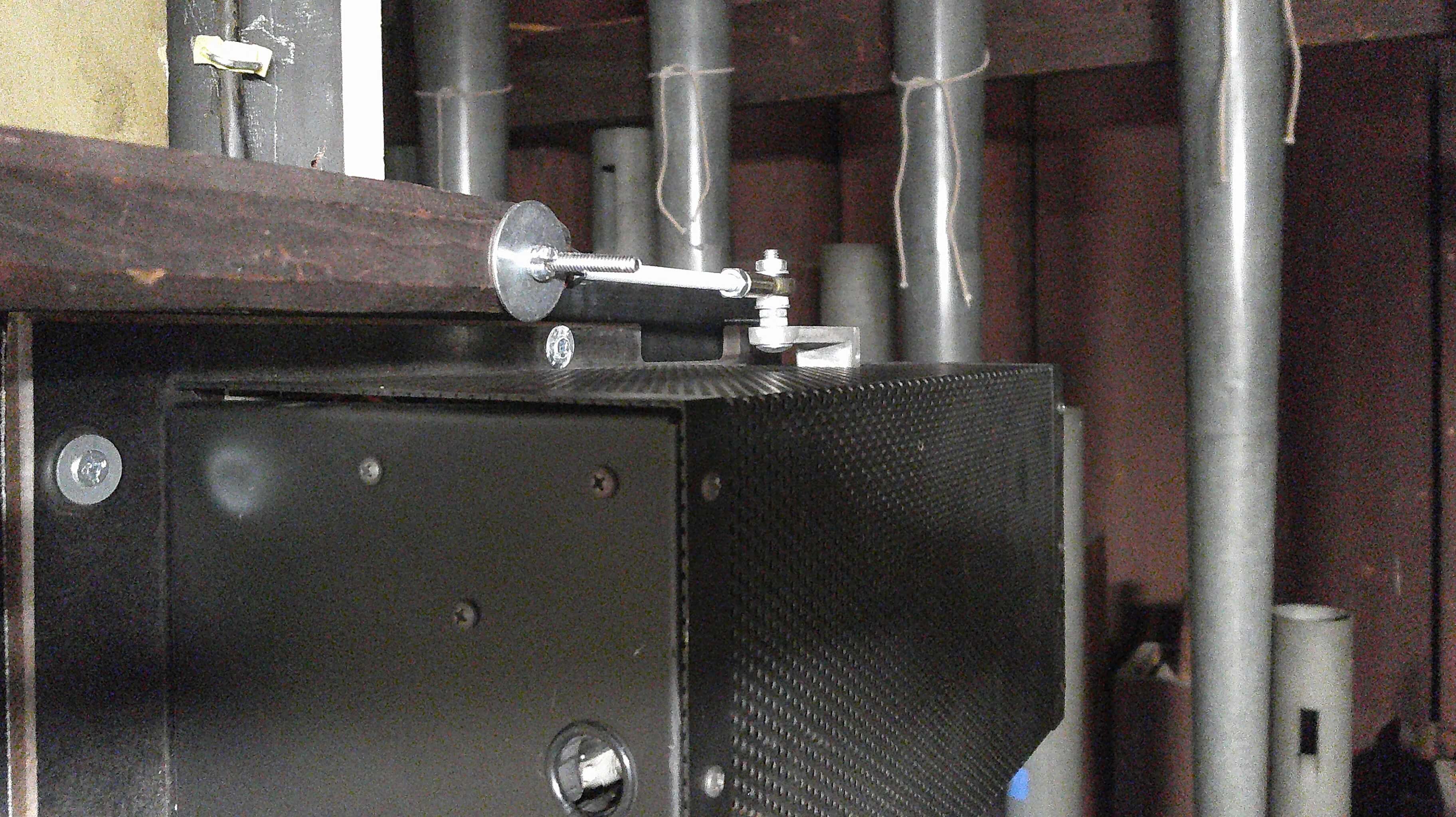
Installed shade motors for Swell and Choir shades, replacing the 1923 whiffletree motors which no longer worked. The two motors were taken from a recently dismantled but well-maintained organ in Pennsylvania:
.
Performed minor, miscellaneous DC electrical repairs/re-soldering.
Repaired worst cracks in pipe racks; reassembled pipe rack of Great division’s Mixture and Sesquialtera:
Before: 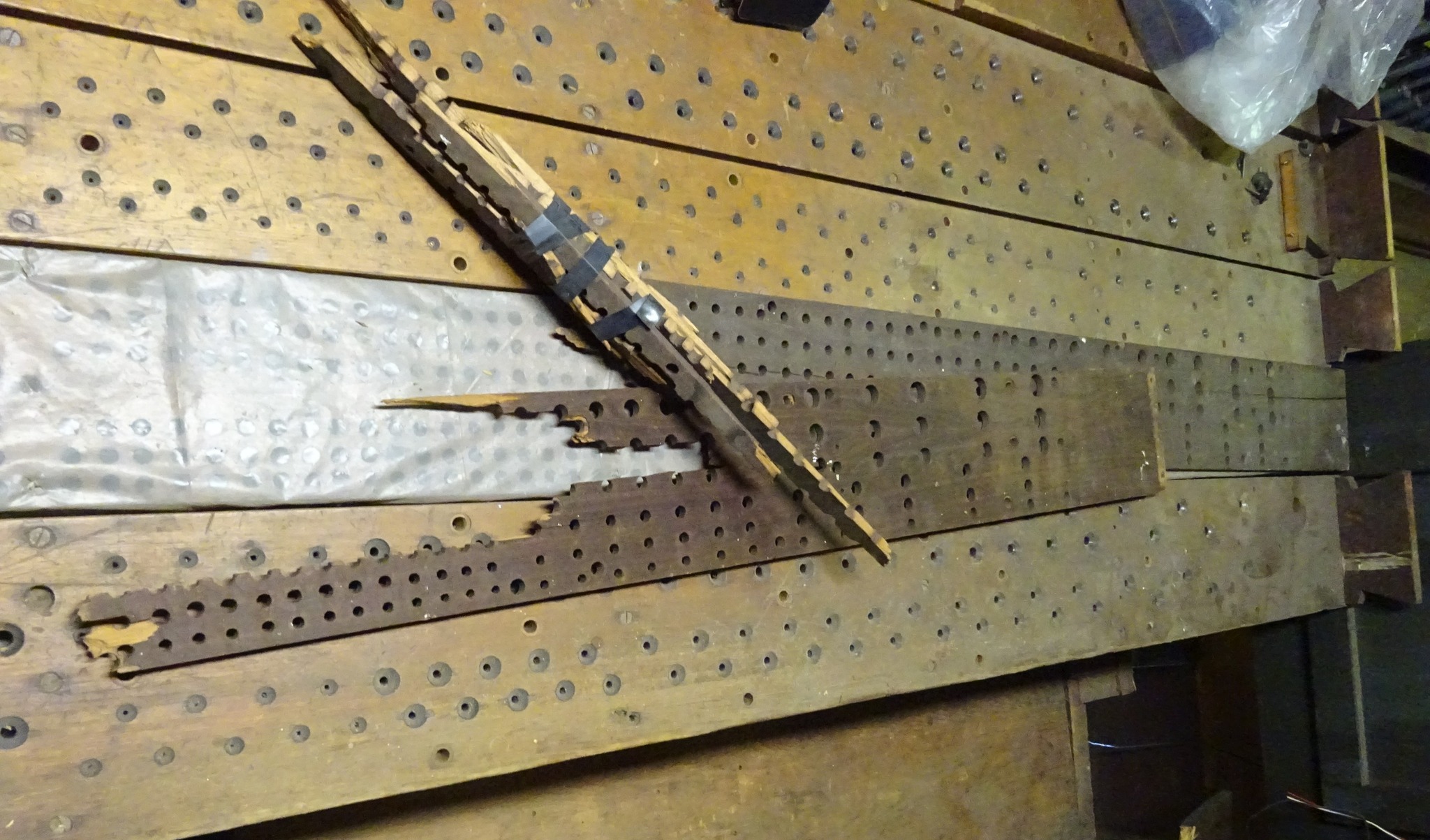
After: 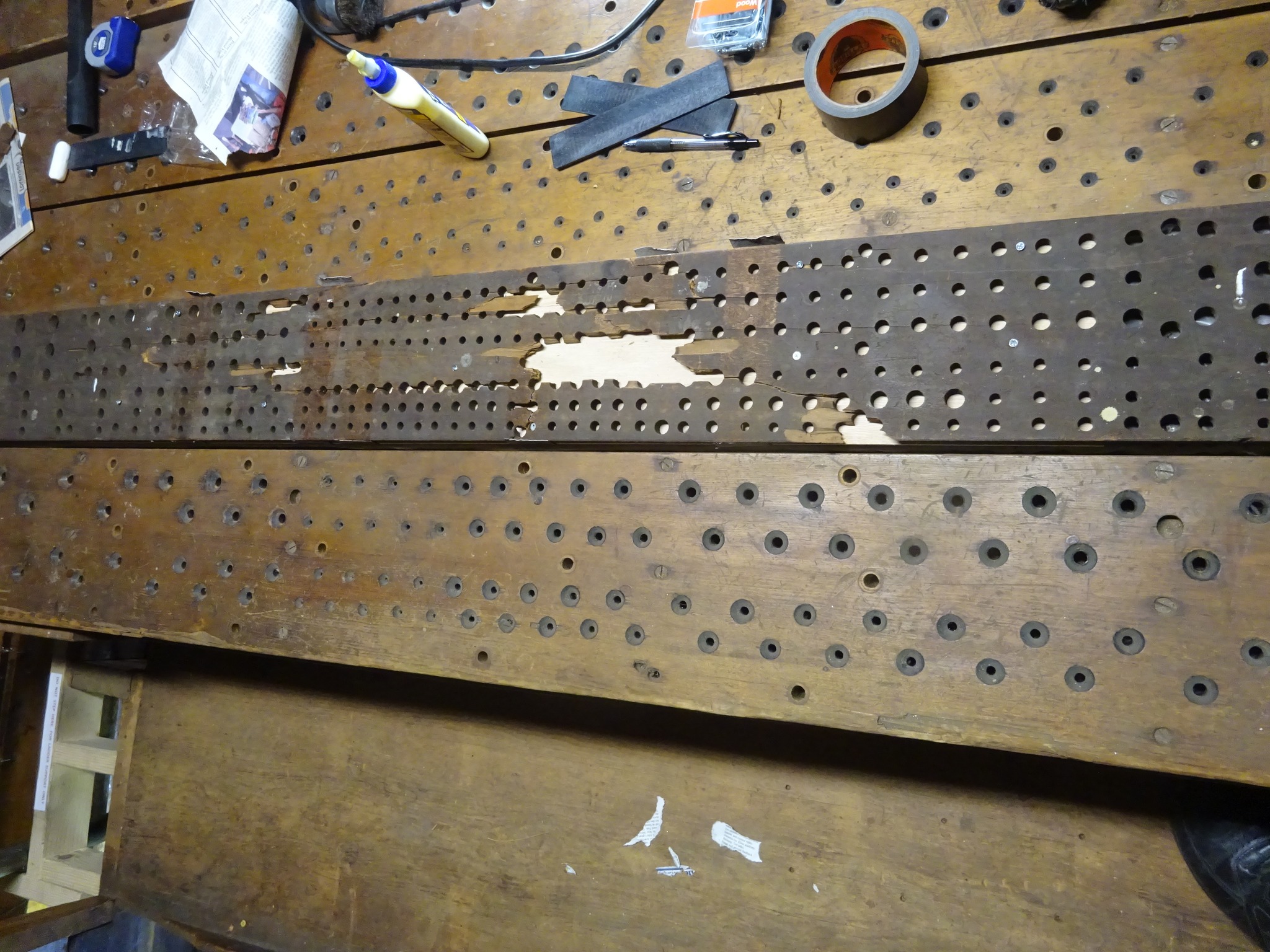
Realigned & felted holes of Double Open Diapason Extension pipe rack; repaired cracked toeboard of Great Trumpet/Clarion; additional miscellaneous carpentry work.
Replaced missing pipe rack of Great 4’ Clarion with new one.
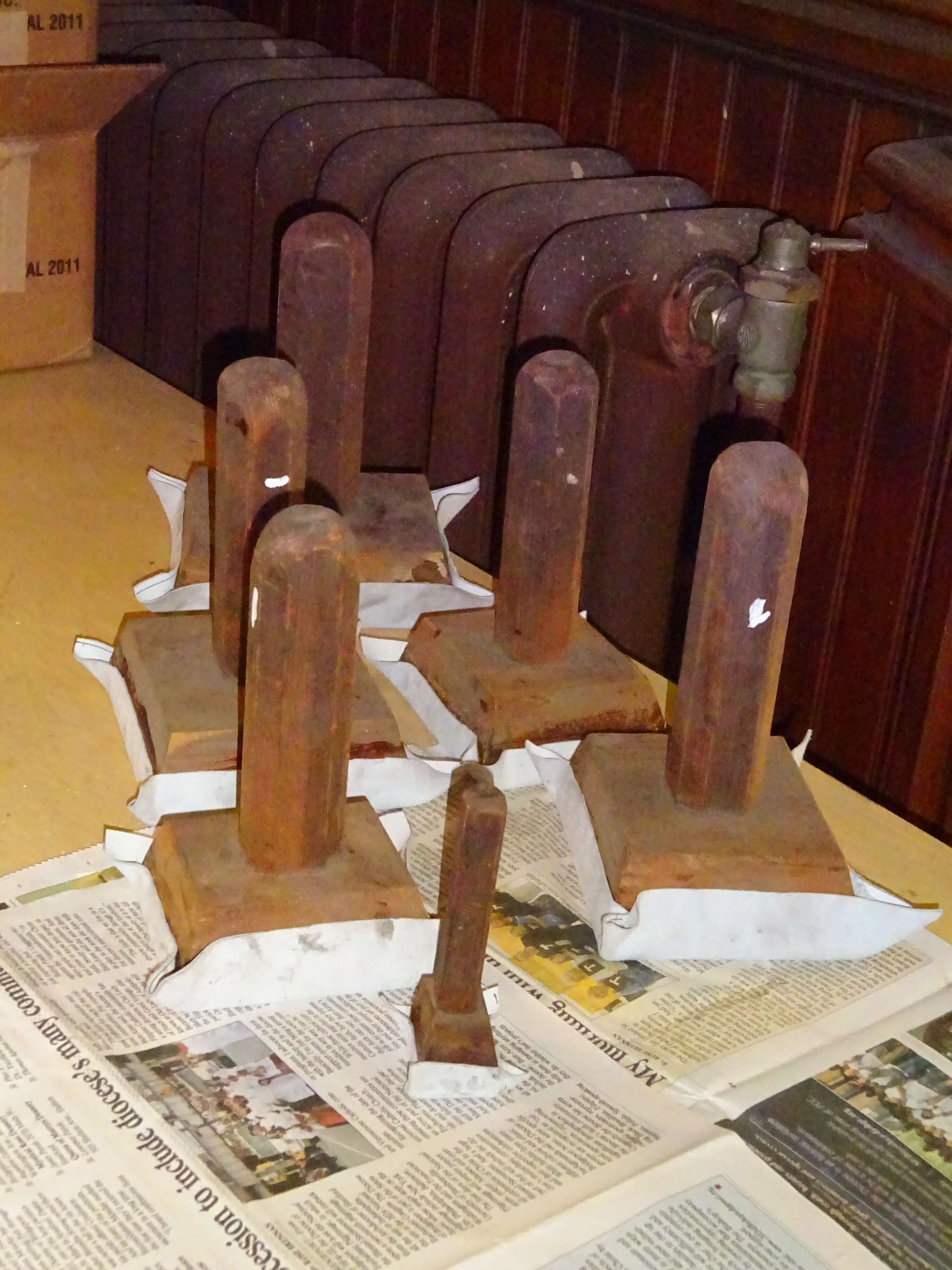
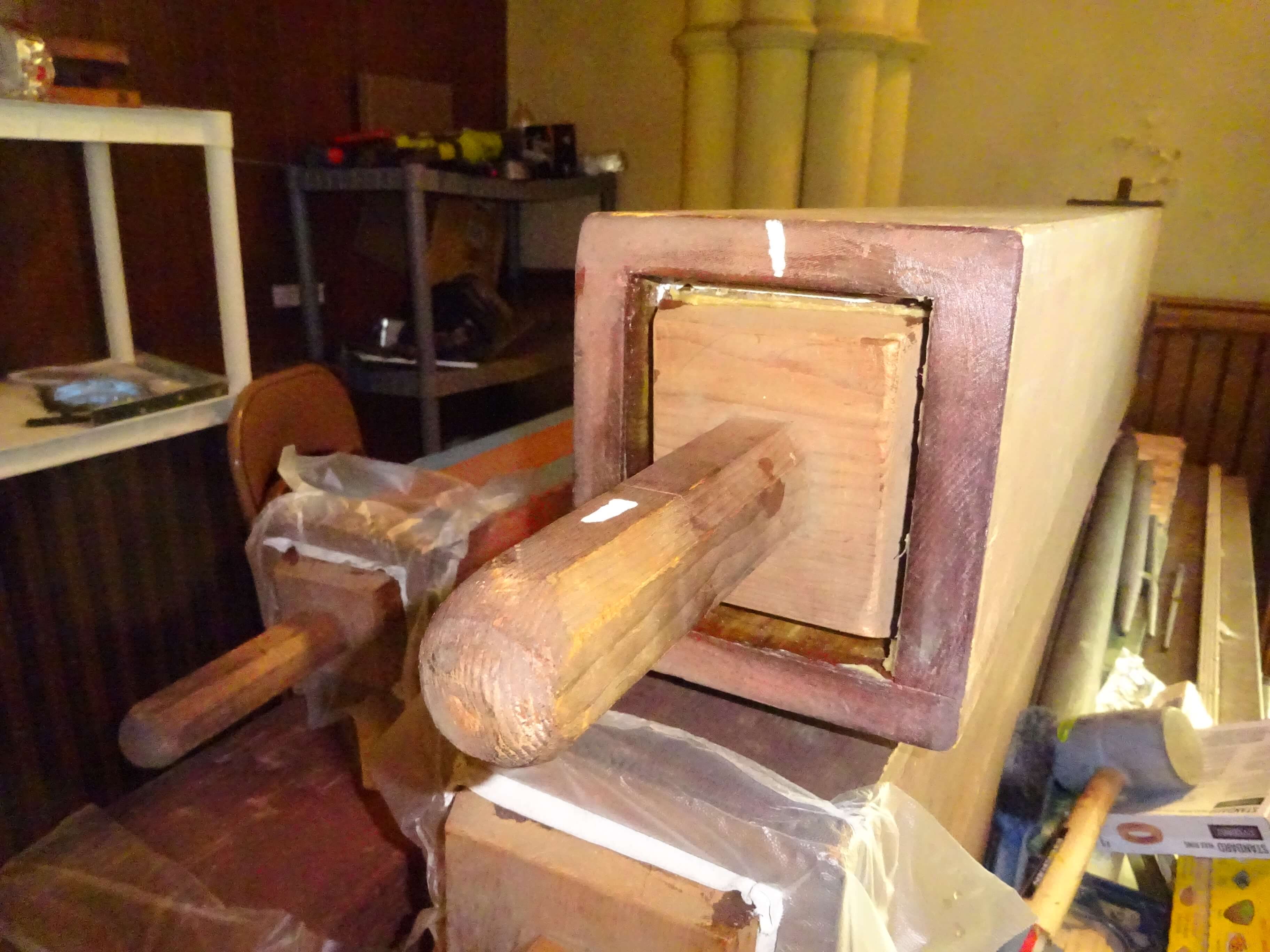
Releathered approximately 20 pipe stoppers that had fallen into wooden pipes. These are used to tune ‘stopped’ wooden pipes:
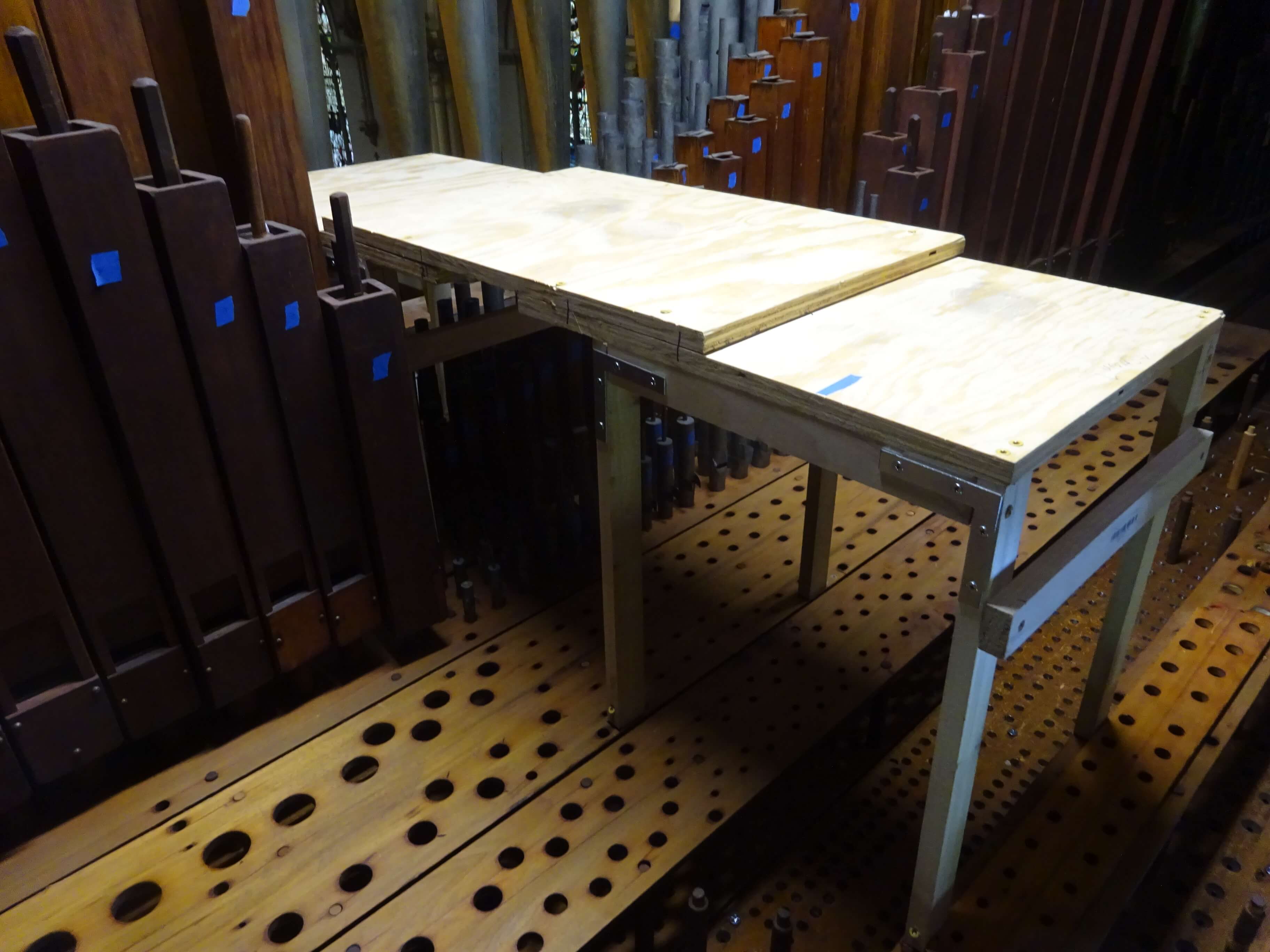
Added new “perch” down center of Great and Swell divisions to facilitate tuning, etc:
Replaced some of the leaking panel gaskets of the reservoirs (wind pressure regulators) with new Nitrile-cork (aka Buna rubber-cork) composite gaskets.
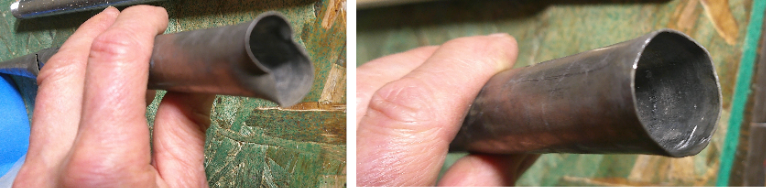
Removed dents in several dozen metal pipes in Swell division:
Re-soldered broken solder joints in approximately 10 pipes in Swell division.
When accessing a component to clean etc, replaced most of the 1876 slotted screws with new Phillips screws of same size and head type, to facilitate future access.
Installed new DC fuse box from rectifier to power keyboards.
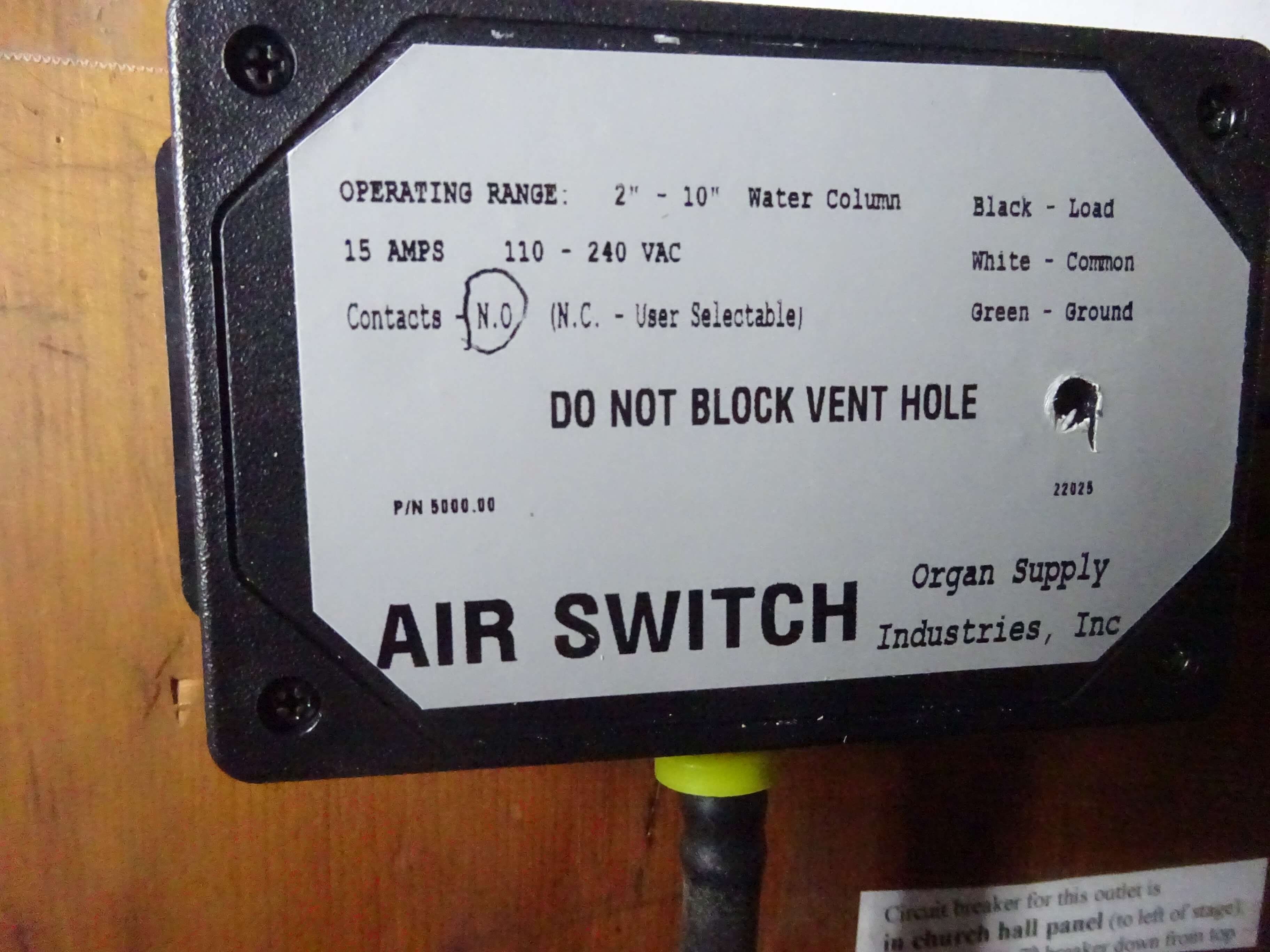
Installed new air switch to turn on DC rectifier when blower is turned on:
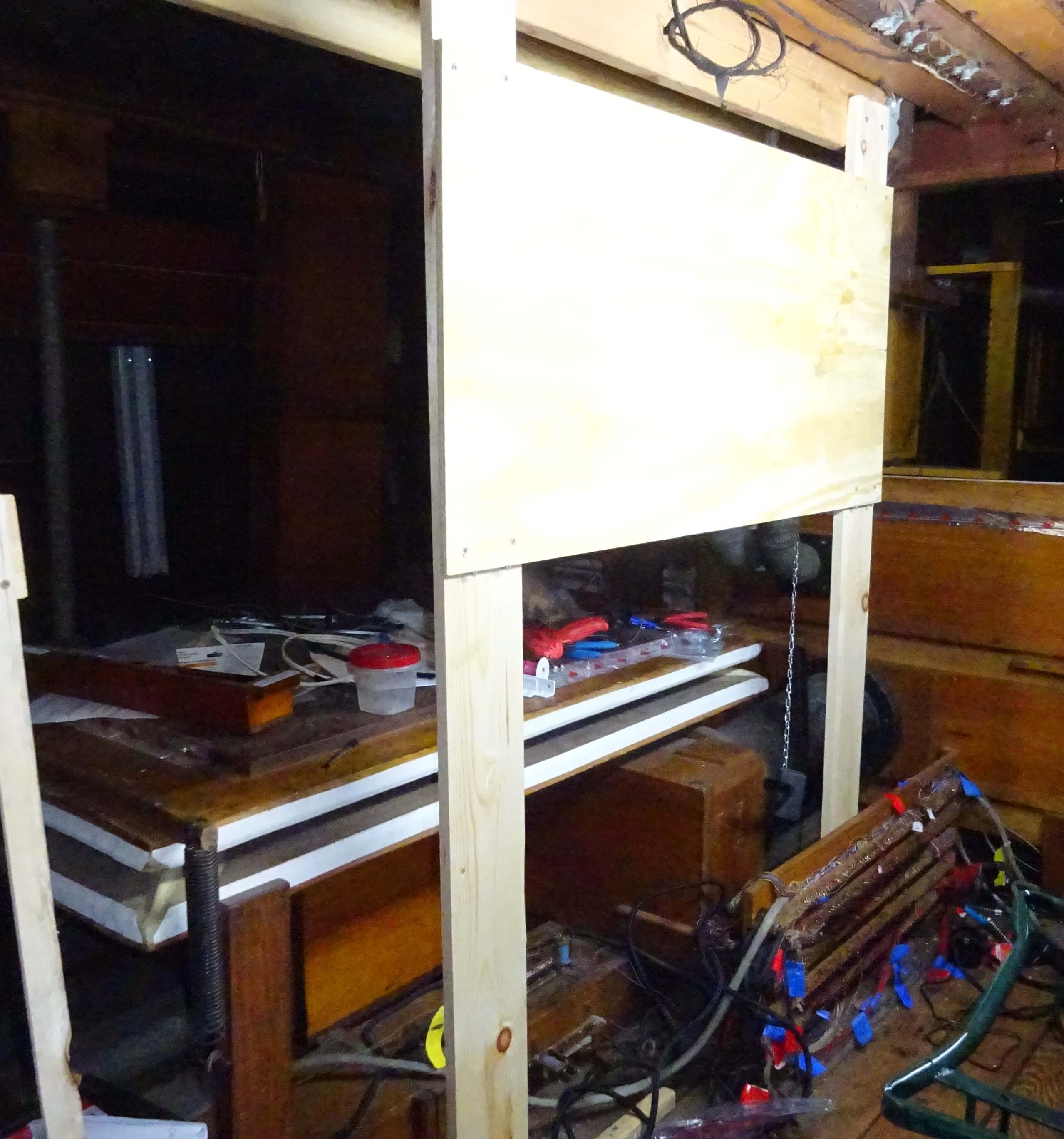
Installed a new eye-level mount for the future chamber drivers/relays which will replace the 1923 spreader board. The digital relays/switches for various components will be placed here:
Modified organ blower room and organ loft’s entry point of blower’s air conduit (“wind trunk”) so that the blower now draws its air from a grill in the organ loft rather than from the basement/church hall. Using the same air where the organ itself is located to provide “wind” for the organ will help stabilize temperature, humidity and tuning of organ wind chests, reservoirs and pipes:
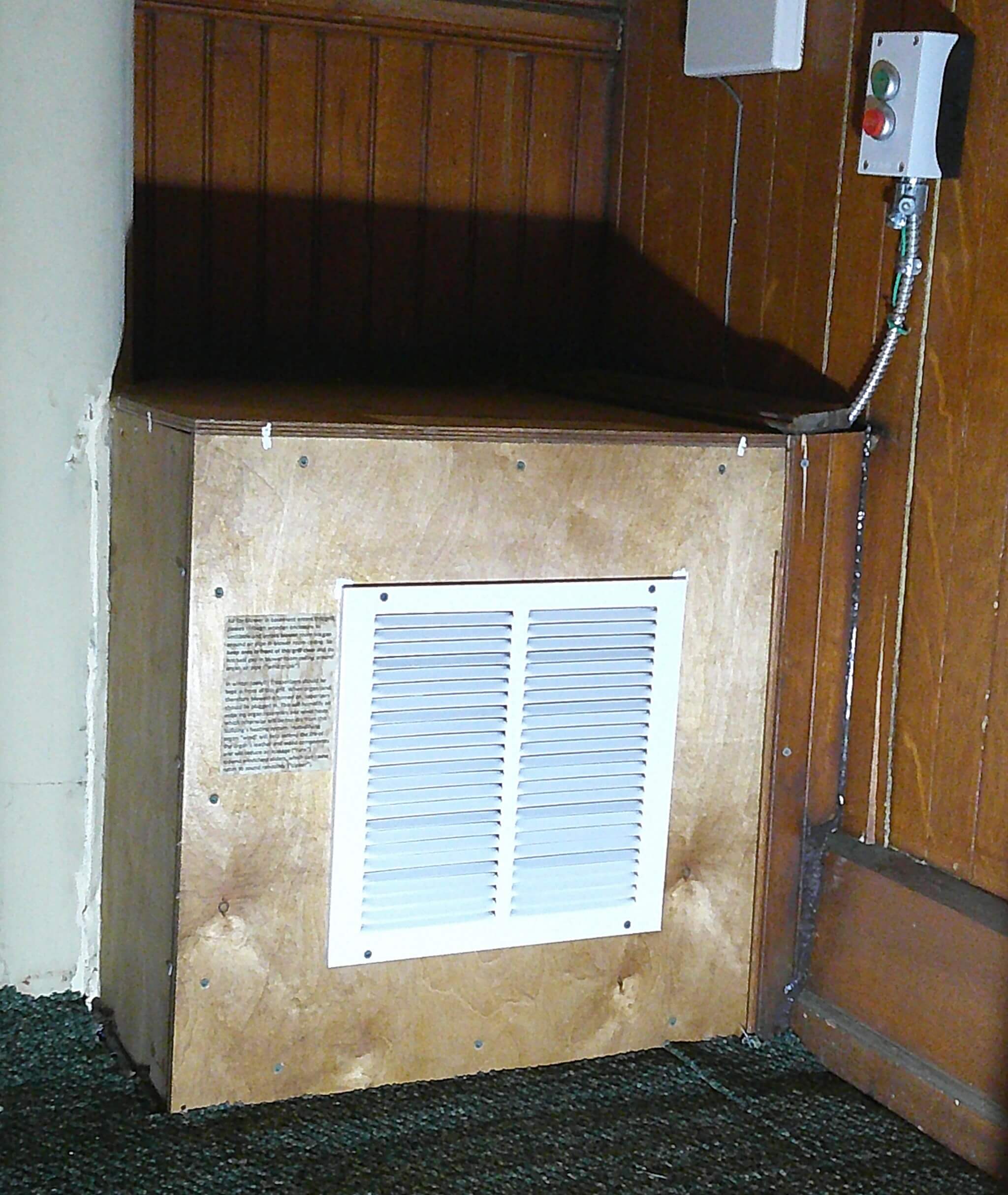
When turned on, the organ blower now draws its air from the new grill enclosure in the organ loft, then pulls the air down to the blower in basement blower room. From there the pressurized air returns to the loft via a 12-inch-diameter pipe (wind trunk) and enters the pressure regulators (reservoirs) beneath the organ pipes.
Created permanent loft workshop for minor organ repairs, e.g. releathering wooden pipe stoppers and smaller components.
Updated through September 20, 2024. Approximate value of labor and materials (i.e. what most organ companies would charge) for the work listed above: c. $250,000. Amount which Valley Organ Restoration Co has charged your parish, for both labor and materials: $0
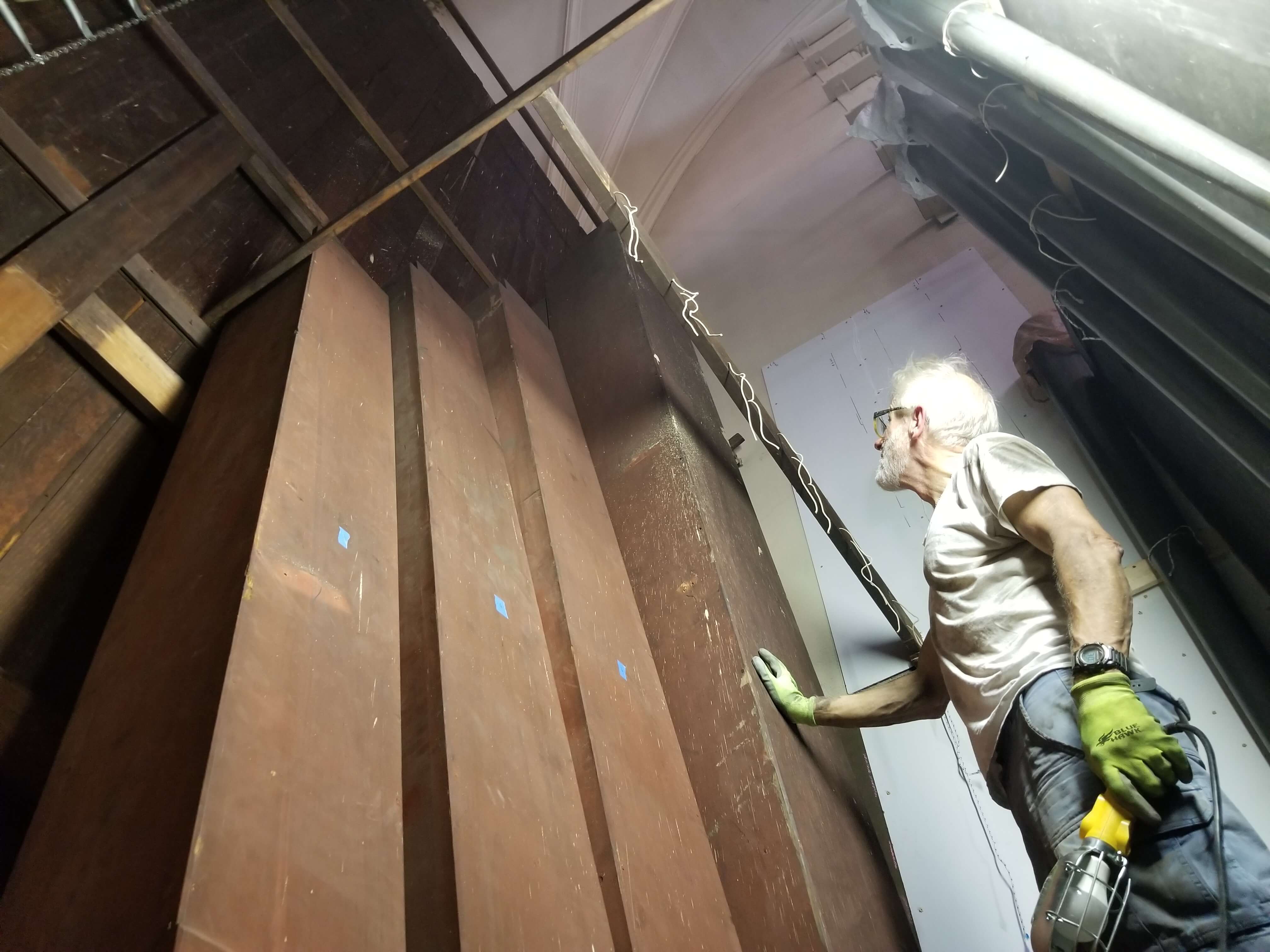
Photo above: organ repair contractor Christopher Schaefer (Principal & founder of Valley Organ Restoration Co and Project Director) resting his hand on the largest wooden pipe inside St. Pat’s organ. It’s c. 17 feet tall and weighs over 200 lbs. Chris had to pull the bottom of the pipe out about 12″ (as he did with the 3 pipes to its left) so he could crawl behind these pipes to do some repairs.
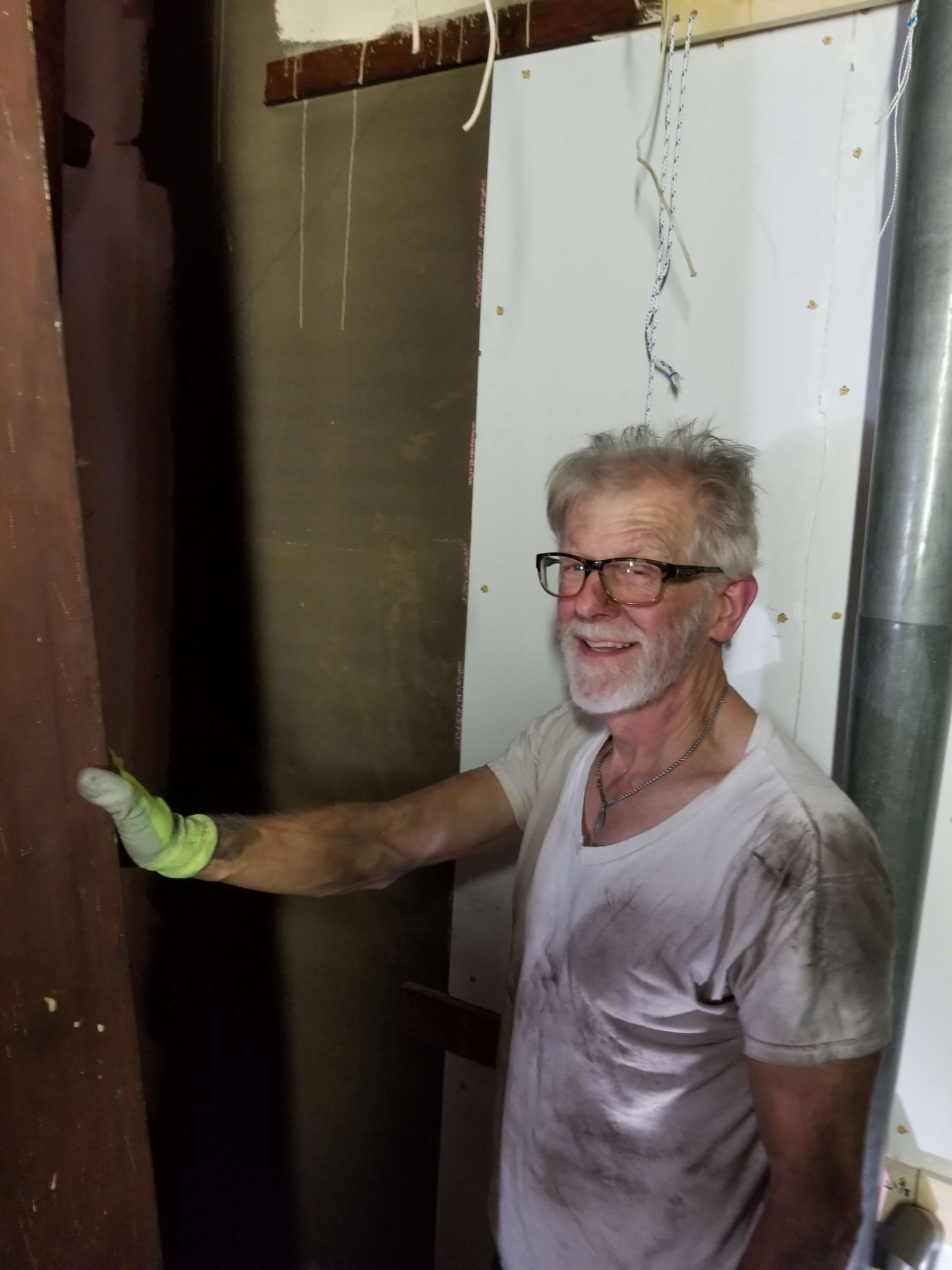
Chris covered with century-old soot after moving that heavy pipe!
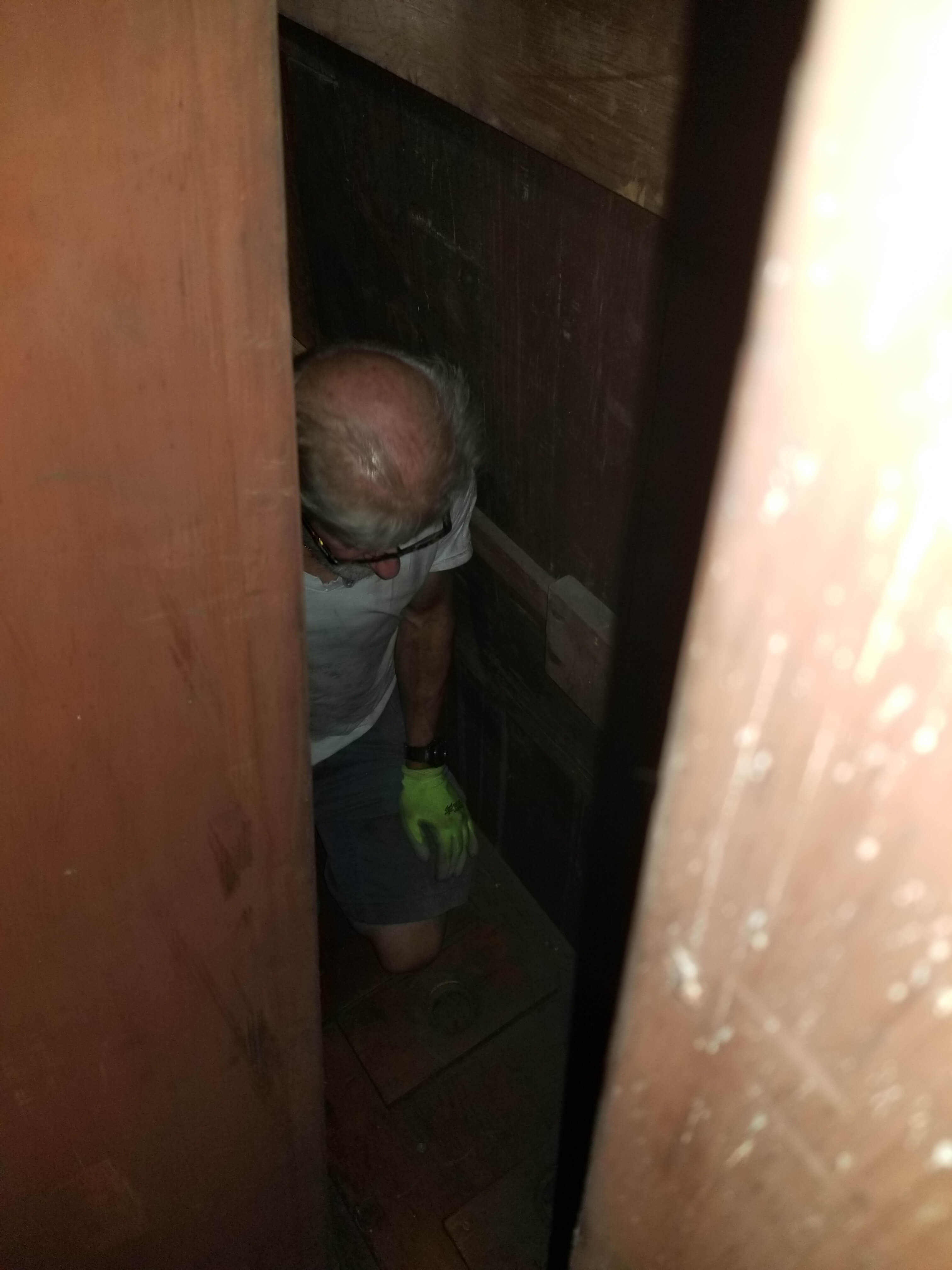
Chris kneeling to do some repairs behind that huge pipe he moved
To see how you can help, go here:
Organ restoration: How You Can Help… – 1876 Henry Erben Organ Waterbury CT
For the history of this organ go here:
About the Waterbury Erben organ – 1876 Henry Erben Organ Waterbury CT
For much more detailed photo albums of ongoing restoration, go here:
Detailed photo albums – 1876 Henry Erben Organ Waterbury CT
Valley Organ Restoration Co. LLC
Christopher Schaefer, Principal Member/Founder & Project Manager
CT Business ALEI 2911668
‘To restore all in Christ’
Dum tempus habemus, operemur bonum ad omnes, maxime autem ad domesticos fidei. (Gal. 6:10)
 1876 Henry Erben Organ Waterbury CT